They Were Trying to Make Wallpaper. They Accidentally Invented Bubble Wrap.
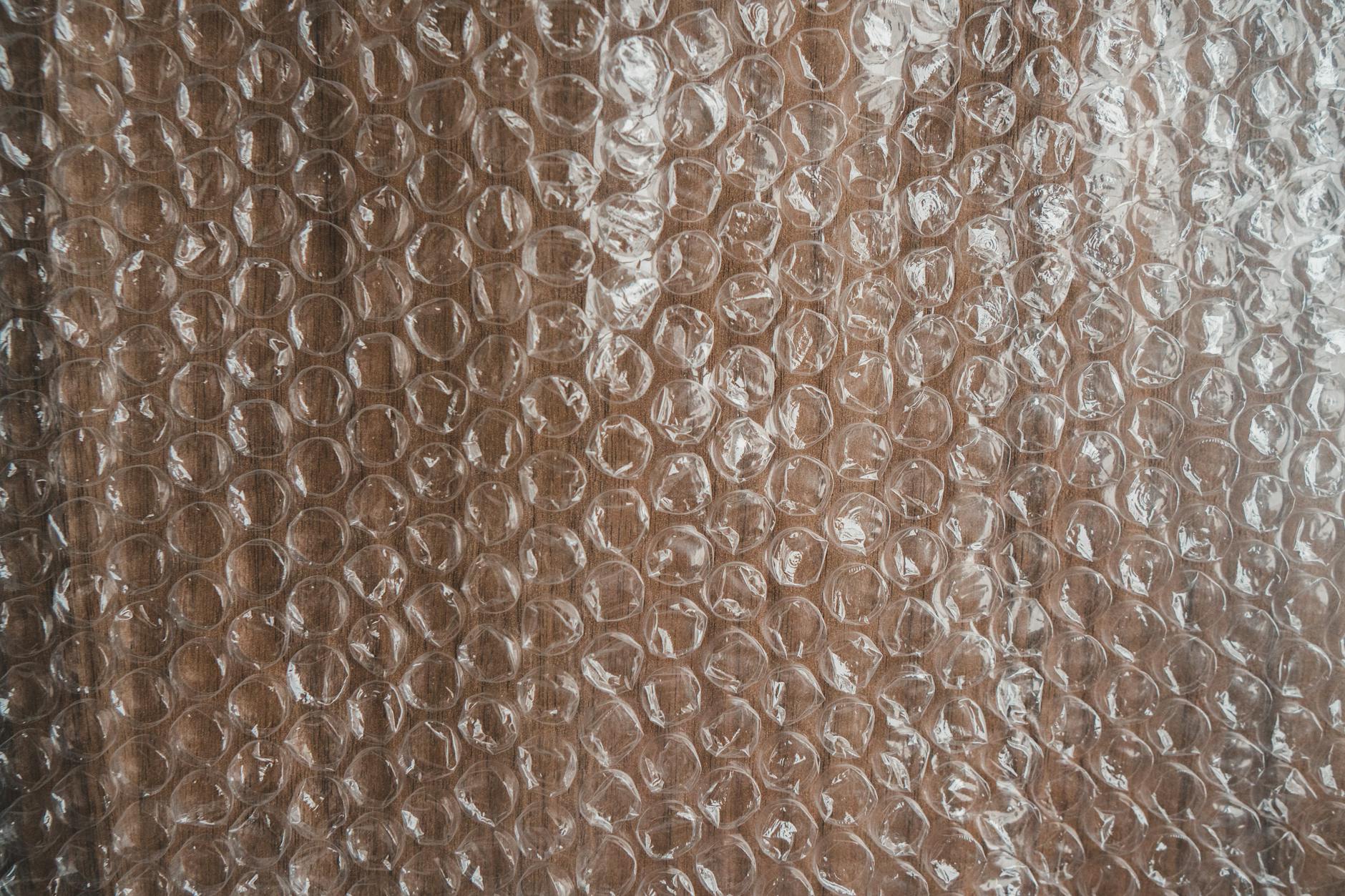
They Were Trying to Make Wallpaper. They Accidentally Invented Bubble Wrap.
There's a good chance you have some in your garage right now. Maybe it's wrapped around a fragile picture frame you moved two apartments ago, or stuffed into a box you haven't fully unpacked. And if you're honest with yourself, you've absolutely stopped what you were doing just to pop a few rows of it.
But here's the thing almost nobody knows: Bubble Wrap was never supposed to exist. Not in any form you'd recognize, anyway. It was born out of a failed attempt to cash in on a mid-century interior design trend — and it took years of rejection before anyone figured out what it was actually good for.
The Shower Curtain Experiment That Started Everything
In 1957, two engineers named Alfred Fielding and Marc Chavannes were working in a garage in Hawthorne, New Jersey, convinced they were about to corner the home décor market. The idea was straightforward enough: textured, three-dimensional wallpaper was having a moment, and they wanted in. Their approach was to seal two plastic shower curtains together, trapping small pockets of air between them to create a raised, bubbly surface.
The result was interesting. It was tactile. It was kind of fun to touch.
It was also a completely terrible wallpaper.
The material didn't hang right, it didn't look refined, and it certainly wasn't going to show up in any mid-century living room. Undeterred, Fielding and Chavannes pivoted. Maybe it could work as greenhouse insulation? They pitched it as a way to trap heat around plants. That idea didn't take off either.
For several years, the invention just kind of sat there — a solution looking for a problem.
IBM Changed Everything
The breakthrough came in 1959, and it arrived from an unlikely direction: the computer industry. IBM was preparing to ship its brand-new 1401 computer — a hulking, expensive piece of hardware that needed serious protection during transit. Someone at Sealed Air Corporation, the company Fielding and Chavannes had founded to commercialize their material, made the connection. Those air-filled plastic bubbles weren't insulation or wallpaper. They were cushioning.
IBM tested it. It worked beautifully. Fragile, heavy, irreplaceable equipment could now travel across the country with a dramatically lower risk of damage. Sealed Air had found its market.
From there, adoption was swift. As mail-order shopping expanded through the 1960s and 70s, and as businesses increasingly needed to ship delicate goods across long distances, Bubble Wrap became the go-to solution. By the time e-commerce exploded in the late 1990s, it was everywhere — in warehouses, shipping departments, and yes, garages across America.
Why Popping It Feels So Good
Here's where the story gets genuinely weird in the best way. At some point — nobody can quite pinpoint exactly when — people stopped just using Bubble Wrap and started playing with it. The urge to pop those little air pockets turns out to be nearly universal, and researchers have actually taken it seriously enough to study.
Psychologists at Fordham University conducted research suggesting that popping Bubble Wrap can meaningfully reduce tension and increase feelings of calm and alertness. The repetitive physical action, the satisfying little snap, the slight resistance before the pop — it hits something in the brain that's hard to explain but impossible to ignore. Some researchers have compared it loosely to other repetitive soothing behaviors, like clicking a pen or cracking knuckles.
Sealed Air Corporation leaned into this cultural phenomenon hard. In 2001, they launched Bubble Wrap Appreciation Day — observed on the last Monday of January every year — which has since become a minor but genuine annual event, complete with social media chatter and office celebrations. The company also introduced a virtual popping app that racked up millions of downloads, which says a great deal about how deep the compulsion runs.
A Billion-Dollar Accident
Today, Sealed Air is a Fortune 500 company generating billions in annual revenue. Bubble Wrap, under various brand names and in countless variations, is manufactured in enormous quantities around the world. There are now inflatable versions, biodegradable versions, and flat-pack versions that can be inflated on demand — a concession to the reality that shipping costs make bulk air expensive.
Alfred Fielding and Marc Chavannes never did crack the wallpaper market. But they created something that shows up in virtually every American home at one point or another, something that's protected everything from family heirlooms to smartphone shipments, and something that — for reasons science is still working to fully explain — makes people genuinely happy to touch.
Not bad for a couple of shower curtains sealed together in a New Jersey garage.
Next time you reach for that sheet of Bubble Wrap and start working your way down a row of bubbles, you're participating in a small, satisfying ritual that traces back to a design failure from nearly 70 years ago. The wallpaper idea was a bust. Everything else that followed was pure accident — and pure gold.