A Bald Pharmacist's Pacific War Experiment Created America's Summer Ritual
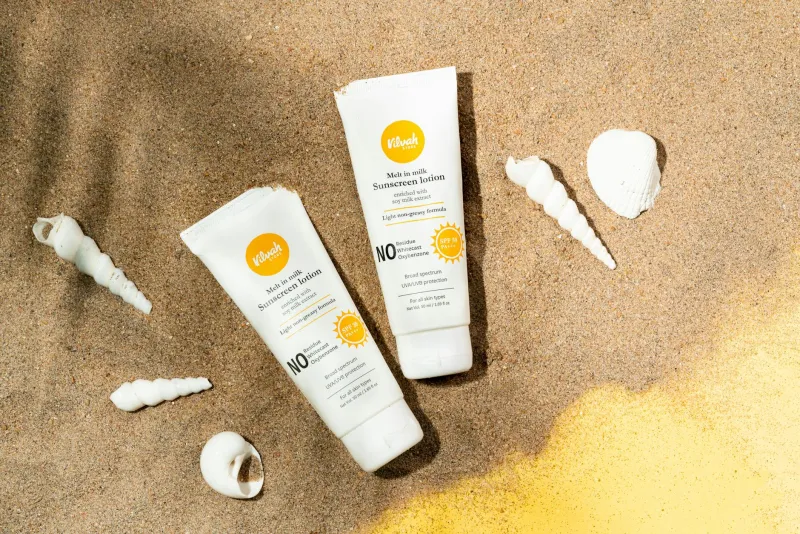
Every summer, millions of Americans perform the same ritual: slathering white cream on their bodies before heading to the beach. It's become so automatic that we barely think about it. But this habit that now defines American summers started with one desperate pharmacist experimenting on his own bald head during World War II.
The Bald Head That Launched a Revolution
Benjamin Green had a problem. It was 1944, and American troops fighting in the Pacific Theater were getting absolutely scorched by the tropical sun. Traditional remedies weren't cutting it—soldiers were suffering severe burns that put them out of commission when every fighting man counted.
Green, working as a pharmacist for the military, decided to tackle this problem head-on. Literally. Using his own bald scalp as a testing ground, he began experimenting with different formulations. His breakthrough came when he mixed red petroleum jelly with cocoa butter, creating a thick, sticky substance that he called "Red Vet Pet."
The name might sound ridiculous today, but this crude concoction worked. It created a barrier that actually blocked harmful UV rays, giving soldiers the protection they desperately needed. Green had accidentally stumbled onto something that would eventually reshape how an entire nation thought about sun exposure.
From Military Necessity to Beach Fashion
After the war ended, Green didn't just file away his wartime invention. He recognized that civilians might want protection from the sun too—a radical idea at the time. In the 1940s, most Americans actually sought out sun exposure, believing it was healthy. The concept of deliberately blocking the sun seemed almost counterintuitive.
Green refined his formula, removing the red tint and improving the texture. He partnered with a small company to produce what became the first commercial sunscreen in America. But convincing people to buy it proved challenging. Americans were used to baking in the sun until they turned lobster-red, then dealing with the consequences later.
The breakthrough came gradually through the 1950s and 60s. As more Americans began taking beach vacations and spending leisure time outdoors, painful sunburns became a recurring problem. Green's invention started making sense to regular folks, not just soldiers in the Pacific.
The Science Nobody Understood
What's remarkable is that Green created effective sun protection decades before scientists fully understood how UV radiation damaged skin. He was working purely on observation and trial-and-error. The red petroleum jelly base happened to contain compounds that absorbed and reflected harmful rays, but Green couldn't have explained the chemistry behind it.
It wasn't until the 1970s that researchers began connecting sun exposure to skin cancer and premature aging. Suddenly, Green's wartime experiment looked less like a novelty and more like a medical necessity. The sunscreen industry exploded as Americans finally grasped what Green had figured out through pure experimentation thirty years earlier.
The Billion-Dollar Accident
Today, Americans spend over $1.5 billion annually on sunscreen products. Every drugstore, grocery store, and gas station stocks multiple varieties of what essentially remains Green's basic concept: a barrier cream that blocks UV radiation.
The modern sunscreen aisle would probably amaze Green. SPF ratings, waterproof formulas, spray-on applications, zinc oxide sticks—the industry has evolved far beyond his original red petroleum jelly mixture. But the core principle remains exactly what he discovered while experimenting on his bald head: create a physical and chemical barrier between skin and sun.
The Cultural Shift Nobody Saw Coming
Perhaps the most surprising aspect of Green's legacy isn't the product itself, but how completely it changed American behavior. Before World War II, deliberately avoiding the sun was associated with indoor work and pale, unhealthy appearances. Tanned skin was for farmers and laborers.
Green's invention helped flip that equation. Sunscreen made it possible to spend hours outdoors without burning, which meant Americans could pursue the golden tan they wanted while avoiding the painful consequences. Ironically, a product designed to block the sun enabled the modern tanning culture.
The ritual of applying sunscreen before beach trips, pool days, and outdoor activities has become so ingrained that parents who forget to pack it feel genuinely negligent. What started as a military necessity accidentally became a cornerstone of responsible parenting and summer preparation.
The Accidental Health Revolution
Green died in 1985, long before the full impact of his invention became clear. Dermatologists now credit widespread sunscreen use with preventing countless cases of skin cancer and premature aging. A pharmacist who was just trying to solve a wartime logistics problem accidentally launched one of the most successful public health interventions in American history.
Every time you squeeze that white cream from a tube, you're participating in a ritual that started with one man's willingness to smear experimental petroleum jelly on his own scalp. It's a reminder that sometimes the most transformative innovations come from the most practical problems—and that accidental discoveries can reshape entire cultures in ways their inventors never imagined.