The Black Hole Hunters Who Accidentally Gave America Wi-Fi
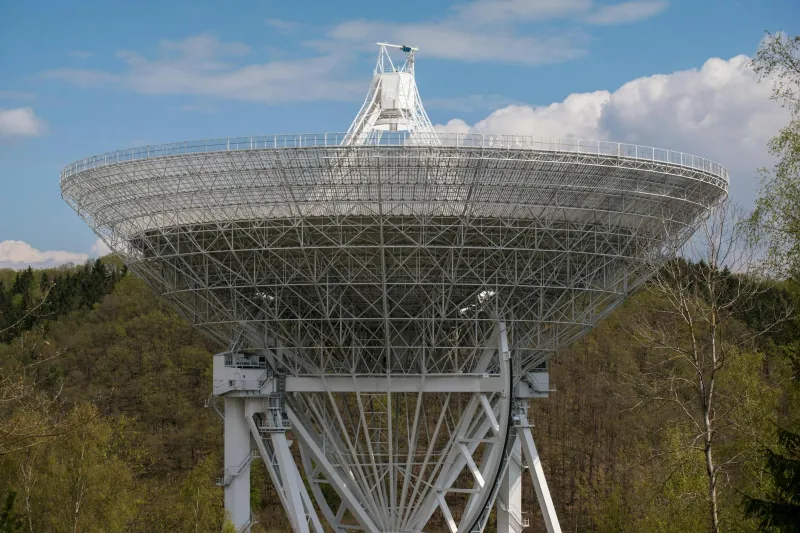
The Military Project That Went Nowhere
In the early 1970s, the US military had a problem. They needed a way for troops to communicate securely across battlefields without relying on cables or traditional radio frequencies that enemies could easily intercept or jam.
The Defense Department commissioned researchers to develop "spread spectrum" technology — a method of broadcasting signals across multiple frequencies simultaneously to make them nearly impossible to detect or disrupt. The concept was brilliant: instead of sending a message on one frequency, you would scatter pieces of it across dozens of frequencies, making it look like random noise to anyone without the proper decoder.
After years of development and millions of dollars in funding, the military concluded the technology was too complex and expensive for practical battlefield use. The project was quietly shelved, its innovations buried in classified research files.
Nobody in the Pentagon imagined that this "failed" military technology would eventually connect every coffee shop, airport, and home in America to the internet.
Australian Astronomers and the Search for Cosmic Violence
Meanwhile, on the other side of the world, a team of Australian radio astronomers was hunting for something that might not even exist: evaporating black holes.
In the 1970s, physicist Stephen Hawking had theorized that tiny black holes created during the Big Bang might be exploding throughout the universe, releasing massive bursts of radio energy. If these "primordial black holes" existed and were detectable, they could revolutionize our understanding of physics.
The Australian Commonwealth Scientific and Industrial Research Organisation (CSIRO) assigned a team of radio astronomers to scan the skies for these theoretical explosions. Led by Dr. John O'Sullivan, the team needed to build incredibly sensitive radio receivers that could detect faint signals from deep space while filtering out interference from Earth-based sources.
 Photo: Commonwealth Scientific and Industrial Research Organisation, via www.kindpng.com
 Photo: Dr. John O'Sullivan, via www.pauseawards.com
The challenge was enormous: they needed equipment that could rapidly switch between different radio frequencies, analyze weak signals buried in noise, and distinguish cosmic events from terrestrial interference.
When Black Hole Research Met Military Leftovers
O'Sullivan and his team soon realized they were trying to solve a problem remarkably similar to what the US military had attempted years earlier. They needed to send and receive information across multiple frequencies simultaneously — exactly what spread spectrum technology was designed to do.
Digging into declassified research, the Australian team discovered the abandoned military work on frequency-hopping communications. They adapted these techniques for their radio telescopes, developing new methods for processing signals scattered across different frequencies.
Their black hole hunt ultimately came up empty — the primordial explosions either didn't exist or were too faint to detect with 1970s technology. But the signal processing techniques they had developed were revolutionary.
The Accidental Invention of Wireless Internet
By the late 1980s, O'Sullivan's team realized their radio astronomy work had produced something potentially more valuable than cosmic discoveries: a practical method for wireless data communication.
Their frequency-hopping system could send digital information across radio waves much more efficiently than existing methods. Unlike traditional radio communications that used single frequencies, their approach could automatically avoid interference, correct errors, and maintain connections even in electrically noisy environments.
In 1992, CSIRO filed patents for what they called "A Method for Improving the Reception of Transmitted Data" — a dry technical description of what would become the foundation of Wi-Fi technology.
How America Adopted Australian Innovation
The timing was perfect. The early 1990s saw an explosion of personal computers, and the internet was beginning to move beyond universities and research institutions. American companies desperately needed a way to connect devices wirelessly, but existing technologies were slow, unreliable, and expensive.
Tech companies across Silicon Valley began incorporating CSIRO's frequency-hopping techniques into their wireless products, often without realizing the Australian origins of the core technology. The Institute of Electrical and Electronics Engineers (IEEE) adopted these methods as the basis for their 802.11 wireless networking standard — the technical foundation of Wi-Fi.
By the late 1990s, millions of American homes and businesses were using wireless networks based on technology originally developed to hunt for exploding black holes in the Australian outback.
The $430 Million Surprise
For years, CSIRO watched American companies make billions from Wi-Fi technology while receiving nothing in return. The Australian researchers had been focused on science, not commerce, and initially didn't pursue licensing fees aggressively.
That changed in the 2000s when CSIRO hired aggressive patent lawyers and began demanding royalties from major tech companies. What followed was one of the largest patent disputes in technology history.
Companies like Microsoft, Intel, Dell, and Hewlett-Packard initially fought the claims, arguing that Wi-Fi was an obvious evolution of existing radio technology. But CSIRO's patents were rock-solid, clearly documenting innovations that American companies had incorporated without permission.
Between 2009 and 2012, CSIRO collected over $430 million in patent settlements from American tech giants. The black hole hunters had inadvertently created one of Australia's most valuable technology exports.
The Hidden Backbone of American Digital Life
Today, Wi-Fi is so ubiquitous that most Americans can't imagine life without it. We expect instant wireless internet in restaurants, hotels, schools, and airports. Our smartphones, laptops, smart TVs, and even refrigerators rely on technology that traces back to abandoned military research and failed astronomical observations.
The story reveals how innovation often happens through unexpected connections between seemingly unrelated fields. Military communications research combined with radio astronomy to produce the wireless technology that powers modern American life.
The Lesson of Accidental Innovation
Wi-Fi's origin story illustrates a crucial truth about technological progress: breakthrough innovations rarely come from trying to solve the problem they eventually solve.
The US military wasn't trying to create home internet. Australian astronomers weren't trying to revolutionize communications. They were pursuing their own specific goals, developing tools for their particular challenges.
But their "failed" projects created building blocks that later generations could combine in unexpected ways. The spread spectrum techniques that seemed useless for battlefield communications proved perfect for home networks. The signal processing methods that couldn't find black holes could connect laptops to the internet.
Every time an American connects to Wi-Fi, they're using technology born from the marriage of military paranoia and cosmic curiosity — a reminder that the most transformative innovations often come from the most unlikely places.
Today, as CSIRO continues its astronomical research with modern radio telescopes, they're still searching the cosmos for unexpected discoveries. They're just more careful about filing patents along the way.