How One Man's Battlefield Horror Created the World's Most Powerful Medical Symbol
The Business Trip That Changed Everything
Henry Dunant was supposed to be talking about water rights. The Swiss businessman had traveled to northern Italy in June 1859 to meet with Napoleon III about a business venture in Algeria. Instead, he walked into the aftermath of one of the bloodiest battles in European history.
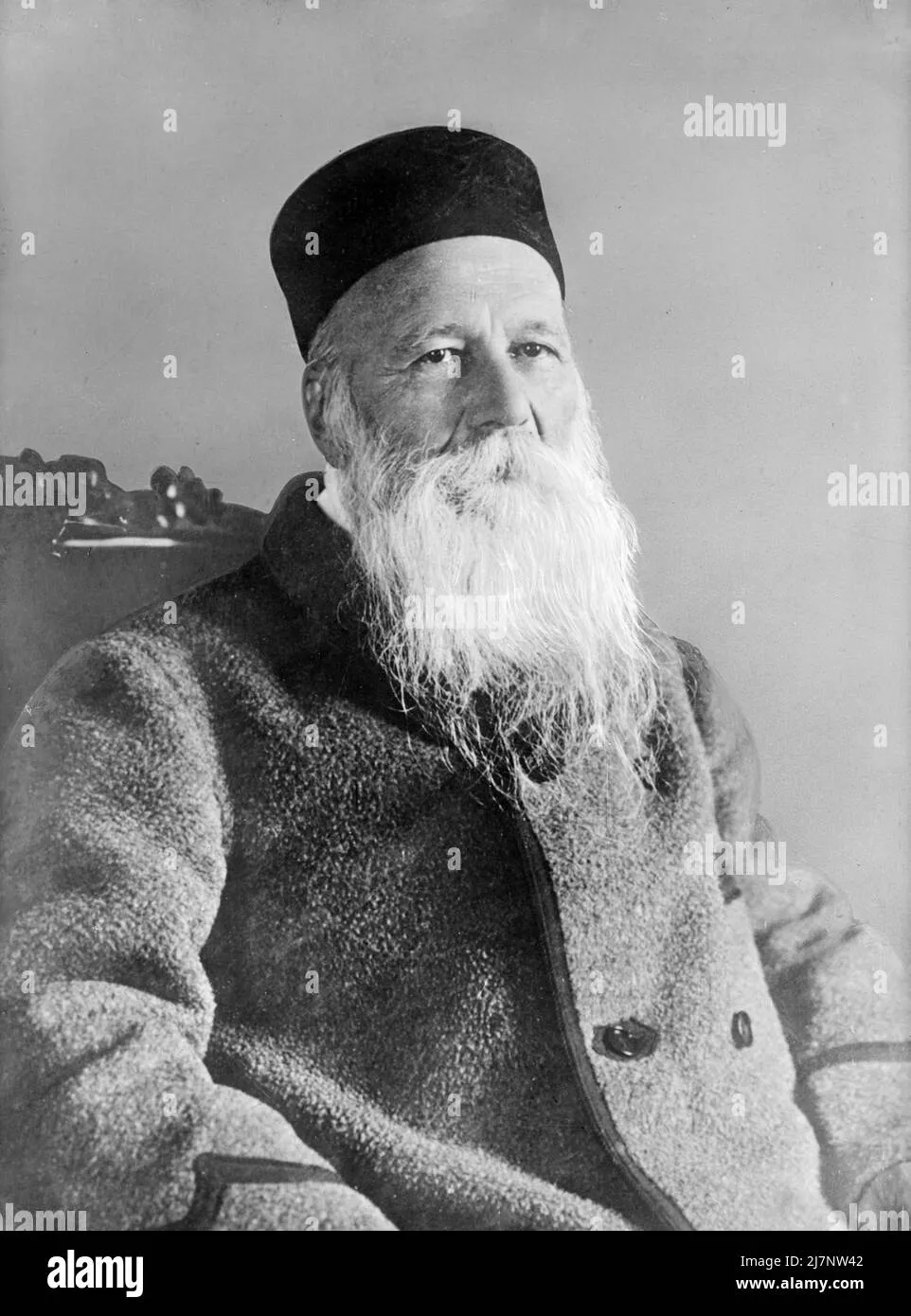 Photo: Henry Dunant, via c8.alamy.com
The Battle of Solferino had just ended. Nearly 40,000 Austrian, French, and Italian soldiers lay dead or dying across the countryside. What Dunant witnessed that day would accidentally create the world's most recognizable humanitarian symbol.
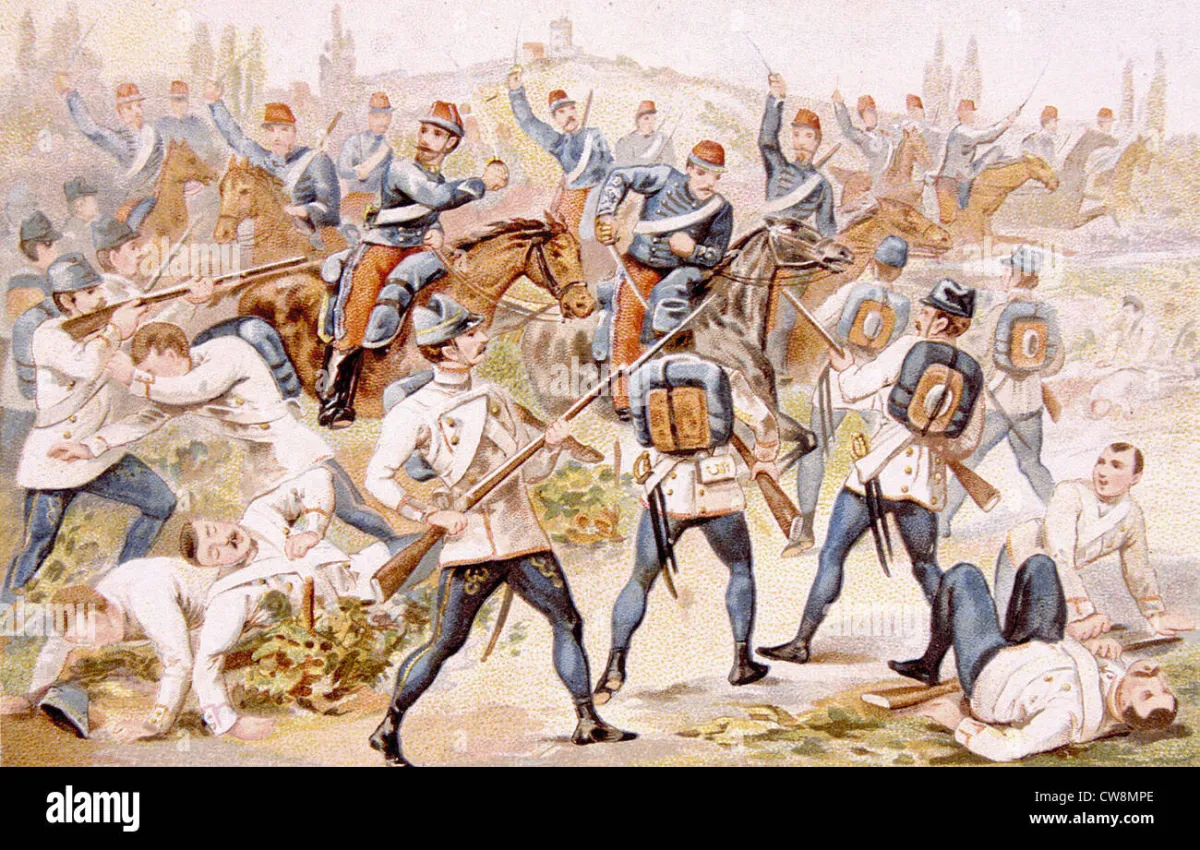 Photo: Battle of Solferino, via c8.alamy.com
When There Was No Such Thing as Medical Neutrality
In 1859, battlefield medicine was primitive and chaotic. Armies brought their own doctors, but once a battle ended, medical care stopped. Enemy wounded were left to die. Civilian doctors who tried to help risked being shot as combatants.
Dunant watched soldiers from all armies bleeding to death while medical personnel stood by, forbidden from crossing enemy lines. The arbitrary nature of who lived and died based on which uniform they wore horrified the businessman.
Forgetting entirely about his water rights meeting, Dunant began organizing local Italian women to provide aid to wounded soldiers regardless of their nationality. He used his own money to buy supplies and turned churches into makeshift hospitals.
The Improvised Symbol That Started Everything
As Dunant's relief operation grew, he needed a way to identify medical personnel and facilities. He couldn't use any national flag — that would make them military targets. He needed something that said "neutral" in a language every army would understand.
Dunant grabbed red cloth and began making armbands with simple cross designs. The choice was practical, not symbolic. The cross was easy to see from a distance, simple enough for anyone to recreate, and didn't resemble any national or military symbol.
Local volunteers wore the red cross armbands as they moved between enemy positions, treating wounded soldiers. Remarkably, most commanders on all sides respected the improvised symbol and allowed the medical workers safe passage.
From Battlefield Experiment to Global Movement
When Dunant returned to Switzerland, he couldn't stop thinking about what he'd witnessed. He wrote a book called "A Memory of Solferino," describing the battlefield carnage and proposing a radical idea: permanent neutral medical organizations that could operate during wartime.
The book became a sensation across Europe. Dunant's proposal sparked international conferences and eventually led to the First Geneva Convention in 1864, which established the legal framework for protecting medical personnel during war.
The delegates needed an official symbol for this new international medical protection. Dunant's improvised red cross design was the obvious choice, but they made one crucial change: they inverted the colors of the Swiss flag as a tribute to Dunant's nationality. The white cross on red background became a red cross on white background.
The Symbol That Almost Didn't Make It to America
When Clara Barton tried to establish an American Red Cross in 1881, she ran into an unexpected problem: Congress didn't want to join any international organization, even a humanitarian one.
 Photo: Clara Barton, via cdn.britannica.com
American lawmakers worried that adopting the Geneva Convention would limit military flexibility. Some argued that the red cross symbol looked too much like a Christian cross and would alienate non-Christian soldiers. Others claimed that international medical neutrality was a European concept that didn't apply to American warfare.
Barton spent five years lobbying Congress, finally succeeding in 1882 when she convinced lawmakers that the Red Cross could also respond to natural disasters, not just wars. The American Red Cross was born, but it took a domestic angle to sell an international humanitarian concept.
The Accidental Brand That Conquered the World
What started as Dunant's improvised battlefield solution became the world's most recognized humanitarian symbol. Today, the red cross appears on hospitals, ambulances, first aid kits, and medical facilities in nearly every country.
The symbol's power comes from its accidental origin. Unlike corporate logos or national flags, the red cross wasn't designed by committees or focus groups. It emerged from genuine human crisis and the spontaneous desire to help suffering people regardless of politics.
Muslim countries use a red crescent instead of a cross, and Israel uses a red crystal, but the principle remains the same: a simple symbol that means "medical help" in any language.
The Businessman Who Never Meant to Start a Movement
Dunant never intended to become a humanitarian leader. He just wanted to discuss irrigation rights and accidentally witnessed a massacre. His business venture in Algeria eventually failed, and he spent years in poverty while the Red Cross movement he started grew into a global organization.
He finally received recognition in 1901 when he became the first recipient of the Nobel Peace Prize. But by then, his improvised red cross symbol had already saved countless lives across dozens of conflicts.
The Modern Legacy of an Accidental Symbol
Every time you see a red cross on a medical facility, you're looking at the result of one man's accidental encounter with war's brutality. Dunant's split-second decision to organize relief efforts using improvised symbols created a visual language that transcends national boundaries.
The red cross proves that some of history's most powerful symbols emerge not from careful planning, but from ordinary people responding to extraordinary circumstances. A Swiss businessman's horror at battlefield carnage accidentally created the world's most trusted medical symbol.
Next time you pass a hospital or see an ambulance, remember that the red cross on its side traces back to a single afternoon in 1859 when someone decided that human suffering was more important than military uniforms.