The Rejected Patent That Accidentally Gave America Its Morning Ritual
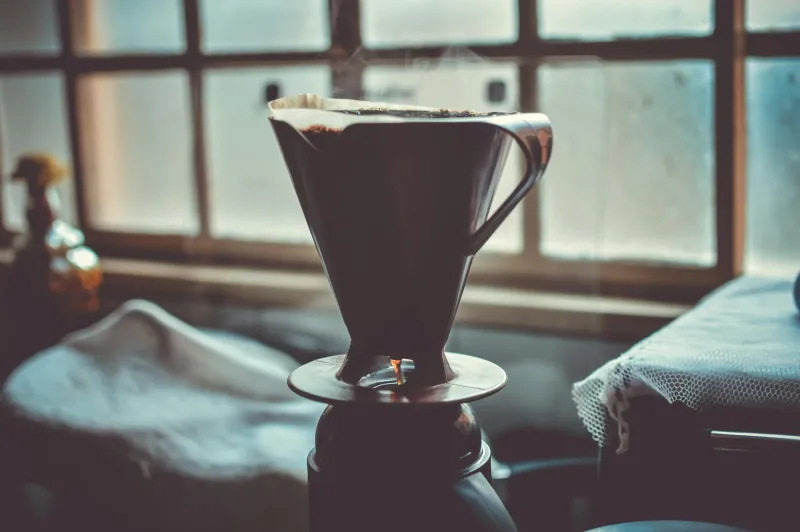
Every morning, millions of Americans pour water into a machine, add ground coffee, and press a button. The familiar gurgle and drip that follows seems as natural as sunrise itself. But this daily ritual exists because of a rejected patent, corporate indifference, and a German housewife who just wanted better coffee during World War II.
The Housewife Who Reinvented Coffee
In 1908, Melitta Bentz was frustrated. Like most Germans, she brewed coffee using the traditional method: boiling grounds in water, then straining the mixture through cloth or metal filters. The result was bitter, gritty, and often left coffee grounds floating in her cup.
Bentz had an idea. She took a piece of blotting paper from her son's school notebook, punched holes in a brass pot, and placed the paper inside. When she poured hot water over the coffee grounds, the paper filtered out the bitter oils and sediment while letting the clean coffee flavor pass through.
It worked perfectly. The coffee was smooth, clear, and free of grounds. Bentz had accidentally invented the paper coffee filter—and with it, the foundation of modern drip brewing.
She filed for a patent on June 20, 1908, and started the Melitta company with 73 pfennigs in startup capital. But her timing couldn't have been worse.
The Patent Nobody Wanted
When Bentz tried to expand beyond Germany, she hit wall after wall. American coffee companies weren't interested. The percolator was king in American kitchens—a bubbling, dramatic machine that forced boiling water up through a tube and over coffee grounds repeatedly. It made coffee strong enough to wake the dead, which was exactly what Americans wanted.
The drip method seemed too gentle, too quiet, too European. Coffee executives dismissed it as weak and impractical. Why would Americans want to wait for coffee to slowly drip when they could have the theatrical performance of a percolator?
Bentz's patents expired in the 1920s, largely unused outside of Europe. American manufacturers ignored her invention entirely.
The Quiet Revolution
But something was changing in American kitchens. By the 1930s, a few small companies began experimenting with drip brewing. They couldn't use Bentz's exact design—her patents had lapsed—but they could copy the basic principle.
The breakthrough came after World War II. Returning GIs had tasted European coffee and preferred its smoother flavor. Suburban housewives, newly equipped with modern kitchens, wanted appliances that were reliable and didn't require constant attention.
The percolator, for all its drama, had serious flaws. It over-extracted coffee by repeatedly boiling the same grounds, creating a bitter, harsh brew. Worse, it required careful timing—leave it on too long and you'd get coffee strong enough to dissolve spoons.
Drip coffee makers offered the opposite: consistent, hands-off brewing that produced the same result every time. You measured water, added grounds, flipped a switch, and walked away. Perfect for busy American mornings.
The Corporate Awakening
By the 1950s, companies like Bunn-O-Matic and later Mr. Coffee began mass-producing electric drip coffee makers. They marketed them not as European imports, but as modern American conveniences. The messaging was brilliant: this wasn't foreign sophistication, it was domestic efficiency.
The Mr. Coffee machine, launched in 1972 with Joe DiMaggio as spokesman, became the tipping point. Here was a baseball legend—as American as apple pie—endorsing a brewing method that had been rejected decades earlier. Sales exploded.
Within a decade, the percolator had virtually disappeared from American homes. The drip coffee maker had won through persistence, not innovation.
The Enduring Legacy
Today, even as espresso machines and single-serve pods compete for counter space, the basic drip coffee maker remains America's default brewing method. Walk into any office break room, hotel lobby, or diner kitchen, and you'll find some variation of Melitta Bentz's century-old invention.
The irony is perfect: a German housewife's wartime solution, rejected by American companies and dismissed as too weak, became the foundation of America's coffee culture. Every morning rush, every office pot, every "coffee's ready" call traces back to that moment in 1908 when Bentz grabbed her son's school paper and decided there had to be a better way.
The rejected patent that nobody wanted had accidentally created America's morning ritual. Sometimes the best innovations aren't the ones that arrive with fanfare—they're the ones that quietly make life a little bit better, one cup at a time.