The Swiss Hiker's Annoying Plant Problem That NASA Turned Into an American Icon

The Walk That Changed Everything
On a summer morning in 1941, Swiss electrical engineer George de Mestral set out for what he thought would be a routine hunting trip in the Jura mountains. He returned home that evening frustrated, covered in cockleburs, and completely obsessed with a question that would consume the next decade of his life: How do these annoying little seed pods stick so tenaciously to everything they touch?
 Photo: Jura mountains, via i.pinimg.com
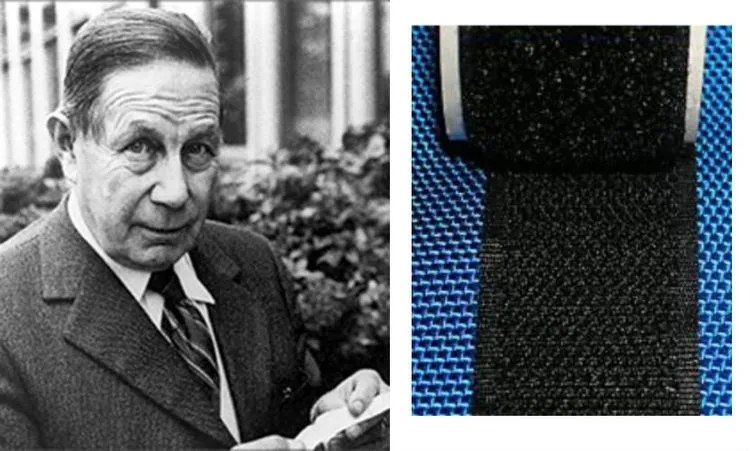 Photo: George de Mestral, via alchetron.com
Most people would have simply picked off the burrs and forgotten about them. De Mestral, however, was the kind of engineer who couldn't let a good mechanical puzzle go unsolved. Under his microscope, he discovered that each burr was covered in tiny hooks that caught onto the loops in fabric and fur — a natural fastening system more effective than anything humans had invented.
"Nature has already solved this problem," de Mestral wrote in his journal. "I simply need to figure out how to manufacture it."
Ten Years of Rejection and Ridicule
What followed was a decade of obsessive experimentation that nearly bankrupted de Mestral and earned him a reputation as the village eccentric. His first attempts using cotton failed completely — the natural fibers were too soft to maintain their hook shape. Synthetic materials were still in their infancy, and most manufacturers dismissed his idea as impractical.
By 1948, de Mestral had finally created a workable prototype using nylon. He could manufacture strips covered in tiny hooks and corresponding strips covered in loops. When pressed together, they created a strong bond that could be separated with a distinctive ripping sound. He called his invention "Velcro," combining the French words "velours" (velvet) and "crochet" (hook).
The problem was that nobody wanted to buy it.
Fashion designers found it too bulky and inelegant. Industrial manufacturers couldn't see practical applications. Even toy companies, which seemed like natural customers, worried that the ripping sound would annoy parents. For over a decade, Velcro remained a solution in search of a problem.
The Space Race Changes Everything
The breakthrough came from an unexpected source: America's desperate race to catch up with Soviet space achievements. After Sputnik shocked the world in 1957, NASA was frantically developing technologies for zero-gravity environments where traditional fasteners simply didn't work.
Buttons required fine motor control that was difficult in bulky space suits. Zippers could jam catastrophically. Snaps were too permanent for equipment that needed frequent adjustment. When NASA engineers discovered Velcro in 1959, they immediately recognized its potential.
In zero gravity, Velcro was perfect. Astronauts could fasten and unfasten equipment with thick gloves. Tools could be secured to surfaces without complex mounting systems. Food packages could be resealed easily. Most importantly, Velcro worked reliably in the extreme temperature variations of space.
From Space Suits to Sneakers
NASA's adoption of Velcro provided something de Mestral's invention had desperately needed: credibility. If Velcro was good enough for America's space program, suddenly it seemed sophisticated rather than gimmicky. The distinctive ripping sound that had once seemed annoying now sounded futuristic.
The Apollo missions became inadvertent marketing campaigns for Velcro. Television coverage showed astronauts using hook-and-loop fasteners for everything from securing equipment to keeping food from floating away. Children watching the moon landing didn't just see American technological superiority — they saw Velcro helping make it possible.
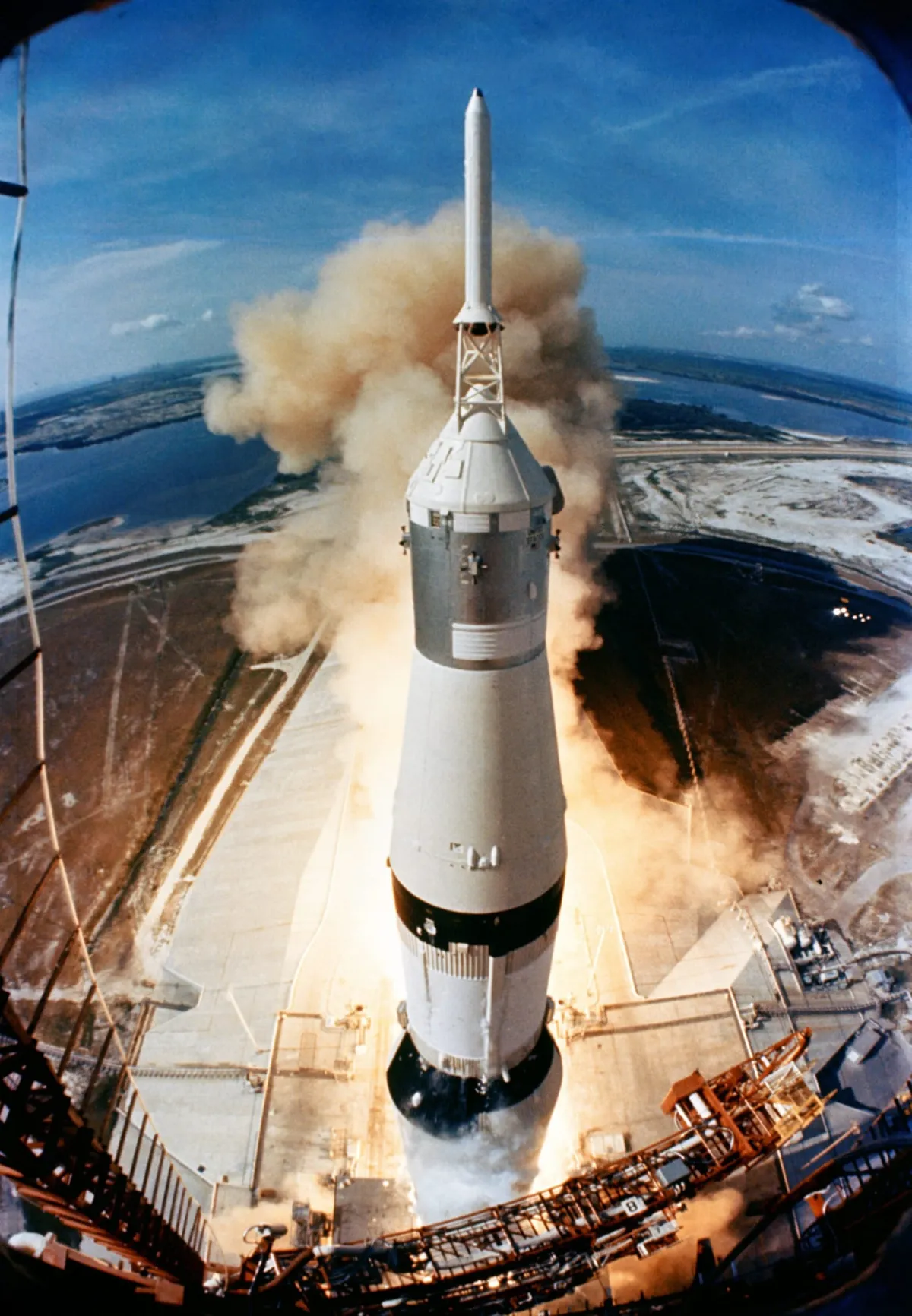 Photo: Apollo missions, via media-cldnry.s-nbcnews.com
Shoe manufacturers were the first to capitalize on this space-age association. In 1968, Puma introduced the first athletic shoes with Velcro straps, marketing them as "space-age fasteners for the modern athlete." The shoes were initially targeted at adults, but parents quickly discovered that Velcro eliminated the daily struggle of teaching children to tie shoelaces.
The Accidental Children's Revolution
What happened next surprised everyone, including de Mestral. Velcro shoes became a massive hit with parents of young children, creating a market segment that hadn't existed before. Suddenly, three-year-olds could put on their own shoes independently, transforming daily routines for millions of families.
The children's market drove innovation in ways NASA never had. Manufacturers developed softer Velcro for sensitive skin, colorful versions that appealed to kids, and stronger adhesives that could withstand playground abuse. By 1980, Velcro had become synonymous with childhood independence — a far cry from its origins in space exploration.
From Swiss Obsession to American Institution
Today, Americans encounter Velcro dozens of times daily without thinking about it. It secures everything from blood pressure cuffs to car floor mats, from laptop bags to hospital gowns. The global Velcro market generates over $1.5 billion annually, with the largest consumer base in the United States.
The irony is that de Mestral's decade of rejection was followed by success he never could have predicted. He had envisioned Velcro primarily for adult clothing and industrial applications. He never imagined it would become most famous for children's shoes and space missions.
That annoying walk in the Swiss mountains didn't just lead to a useful invention — it accidentally created a product that became embedded in American childhood, legitimized by American space exploration, and mass-produced for American consumers. George de Mestral solved nature's fastening puzzle, but NASA made it an American success story.