How World War II Accidentally Created America's Most Complicated Fashion Obsession
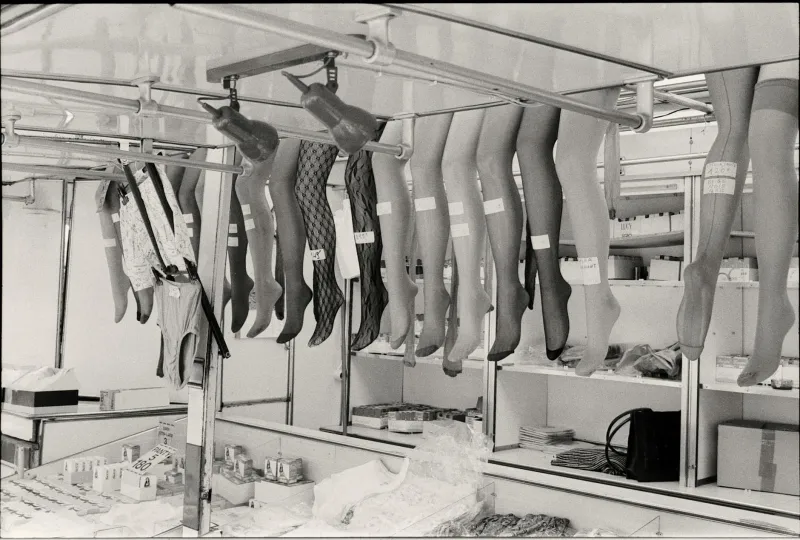
The Silk Crisis That Changed Everything
On December 7, 1941, Japan's attack on Pearl Harbor didn't just thrust America into World War II — it also cut off the country's primary source of silk. Within months, the U.S. military had commandeered virtually every silk stocking in the country, converting them into parachutes, maps, and gunpowder bags. American women, who had worn silk stockings as a mark of respectability since the 1920s, suddenly found themselves facing bare legs and social embarrassment.
 Photo: Pearl Harbor, via www.tripsavvy.com
The timing couldn't have been worse. Silk stockings weren't just fashion accessories — they were cultural necessities. Going without them was like leaving the house in your pajamas. Women tried everything: painting seams on their legs with eyebrow pencils, using leg makeup that stained clothing, even drawing lines with coffee grounds mixed with cold cream.
But salvation was coming from an unexpected source: a DuPont laboratory where chemists had been tinkering with a synthetic fiber originally designed for something far less glamorous than women's legs.
The Toothbrush Fiber That Saved Fashion
Dr. Wallace Carothers had developed nylon in 1935 as part of DuPont's search for synthetic materials. The company's first commercial application was decidedly unglamorous: toothbrush bristles. Nylon bristles were stronger than natural pig hair and didn't retain bacteria, making them perfect for oral hygiene products.
DuPont had experimented with nylon stockings before the war, but silk was so cheap and abundant that there seemed little market for a synthetic alternative. A few test pairs were produced in 1939, but they were treated more as laboratory curiosities than commercial products.
When the silk shortage hit, DuPont executives realized they were sitting on the solution to a national crisis. They rushed nylon hosiery into production, but there was one problem: they had no idea how desperately American women wanted them.
The Great Nylon Riots
On May 15, 1940 — "N-Day" as DuPont called it — nylon stockings went on sale for the first time in select stores across the country. The company expected modest sales. Instead, they witnessed something unprecedented in American retail history.
In New York City, women began lining up outside Macy's at 6 AM for stockings that wouldn't go on sale until 9 AM. By opening time, the line stretched for blocks. Similar scenes played out in Chicago, San Francisco, and Atlanta. In some cities, police were called to manage crowds that had grown unruly.
DuPont had produced 72,000 pairs for the national launch. All of them sold in a single day. The company immediately ramped up production, but demand far outstripped supply. Women who managed to buy nylon stockings often resold them at significant markups — the first luxury black market in American fashion history.
The Psychology of Scarcity
What DuPont hadn't anticipated was how wartime rationing would transform nylon stockings from a convenience into a symbol of normalcy and femininity. During the war years, when sugar, gasoline, and meat were all rationed, a pair of nylon stockings represented a small piece of pre-war luxury that women could still obtain.
The scarcity also created new social rituals. Women formed "stocking pools," sharing and trading pairs like precious commodities. Running a stocking became a minor tragedy that required immediate repair with clear nail polish or careful darning. The phrase "runs in the family" took on new meaning as mothers taught daughters the delicate art of stocking preservation.
Advertisements began emphasizing not just the stockings' appearance, but their durability and washability — practical concerns that had never mattered with abundant silk. DuPont marketed nylon as "stronger than steel," a slogan that resonated with women managing wartime shortages.
The Post-War Beauty Standard
When the war ended and silk became available again, something surprising happened: American women kept buying nylon. The synthetic fiber had proven superior to silk in almost every way — it was stronger, more elastic, dried faster, and cost significantly less.
But nylon stockings also established a new beauty standard that would dominate American fashion for decades. The perfect, uniform appearance of nylon legs became the ideal that women strove to achieve. Unlike silk, which had natural variations and imperfections, nylon created an artificial perfection that seemed attainable but required constant maintenance.
The Unintended Cultural Revolution
By 1950, nylon stockings had become so central to American femininity that going without them was considered scandalous. The "stocking line" — the visible seam running up the back of the leg — became an art form that women spent considerable time perfecting each morning.
This created an unexpected dependency: American women now required a daily ritual of careful stocking application that hadn't existed with more durable silk. The fragility of nylon stockings — they could run at the slightest snag — meant that women carried spare pairs and lived in constant fear of wardrobe malfunctions.
The Liberation That Wasn't
Ironically, a product born from wartime necessity and marketed as liberation from silk shortages actually created a more demanding beauty standard than had existed before. Nylon stockings required more care, more frequent replacement, and more anxiety than their silk predecessors.
It wasn't until the 1960s, when pantyhose replaced individual stockings, and the 1970s, when bare legs became socially acceptable, that American women began to escape the complicated relationship with hosiery that World War II had accidentally created.
Today, when most American women go bare-legged without a second thought, it's hard to imagine a time when synthetic stockings represented both liberation and enslavement. But for nearly three decades, the toothbrush fiber that became nylon hosiery defined American femininity — all because a war halfway around the world cut off access to silk worms in China.