How Government Spin Doctors Accidentally Created the Great American Road Trip
The Hard Sell Nobody Wanted
In 1954, President Eisenhower faced a nearly impossible political challenge: convincing Americans to support the largest public works project in human history. The proposed Interstate Highway System would cost $25 billion (over $280 billion in today's money) and require the federal government to seize private property across all 48 states.
 Photo: President Eisenhower, via papyonoir.p.a.pic.centerblog.net
Early polling showed Americans were skeptical. "Why do we need fancy new roads when we already have roads?" was a common response. Rural communities worried about losing local businesses to highway bypasses. Urban residents feared their neighborhoods would be bulldozed for concrete ribbons.
The Eisenhower administration turned to Madison Avenue for help. They hired the same advertising executives who had sold Americans on suburban living and television ownership. The brief was simple: make Americans excited about highways.
What happened next accidentally created one of America's most enduring cultural myths.
The Propaganda That Became Poetry
The highway marketing campaign, led by advertising executive Bruce Barton, made a crucial strategic decision: instead of focusing on practical benefits like reduced shipping costs or military logistics, they would sell the emotional experience of driving.
 Photo: Bruce Barton, via thaugland.no
Barton's team created the slogan "See the USA in Your Chevrolet," which General Motors sponsored but the government quietly promoted. Print ads showed families driving through scenic landscapes, stopping at roadside attractions, and bonding over shared adventures. The highways weren't just transportation infrastructure—they were "freedom roads" that would let ordinary Americans explore their own country.
"We realized we weren't selling roads," Barton later wrote in his memoirs. "We were selling the idea that every American family could be explorers in their own land."
The campaign introduced language that seems natural now but was completely new in the 1950s. Phrases like "the open road," "highway adventure," and "America's scenic byways" were Madison Avenue inventions designed to make federal spending sound romantic.
The Accidental Cultural Revolution
The highway PR campaign succeeded beyond anyone's expectations. By 1956, public support for the Interstate Highway System had jumped from 31% to 78%. Congress passed the Federal-Aid Highway Act with overwhelming bipartisan support.
But the advertising language had planted something deeper in American consciousness. The idea that driving across the country was inherently meaningful—a form of personal discovery and patriotic expression—began showing up in places that had nothing to do with highway policy.
Jack Kerouac's "On the Road," published in 1957, read like a literary extension of highway marketing copy. Kerouac's famous opening line—"I first met Dean not long after my wife and I split up"—launched a story that treated cross-country driving as spiritual journey, exactly as the government ads had suggested.
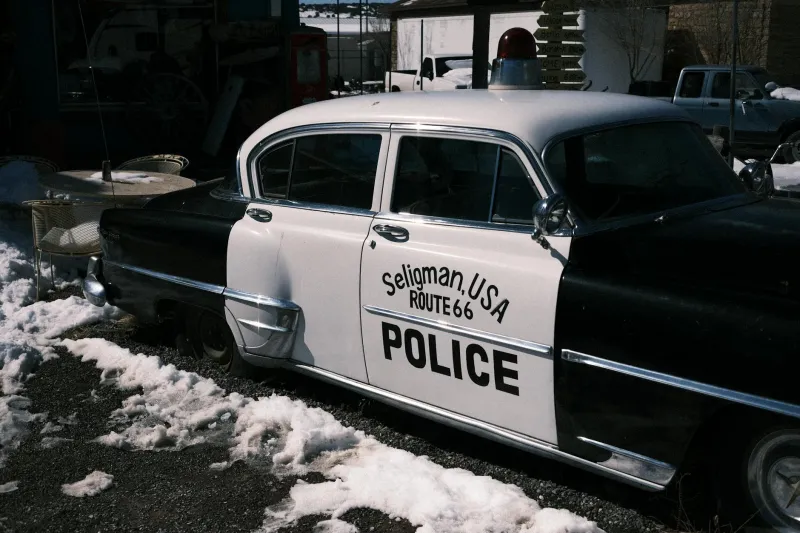
Country music embraced highway mythology with songs like "King of the Road" and "On the Road Again." Rock and roll followed with "Route 66" and "Born to Be Wild." The advertising language created to sell infrastructure had become the vocabulary for American restlessness and freedom.
The Infrastructure of Adventure
As the Interstate Highway System expanded through the 1960s and 1970s, it created the physical infrastructure that made the advertised road trip experience actually possible. Rest stops, scenic overlooks, and roadside attractions were built into highway design specifically to encourage the leisurely travel that the PR campaign had promoted.
The government-created myth became self-fulfilling. Entrepreneurs opened motels, diners, and tourist attractions designed to serve the highway adventurers that Madison Avenue had invented. Howard Johnson's restaurants, Holiday Inn motels, and Stuckey's pecan shops were all built around the assumption that Americans wanted to explore their country by car.
"The highways created the businesses, but the businesses also created the culture," explains transportation historian Dr. Janet Morrison. "By the 1970s, the road trip had become a genuine American ritual, but it started as a government marketing campaign."
The Mythology Outlives the Reality
The highway PR campaign's most lasting achievement was creating cultural narratives that survived long after the original political need disappeared. Movies like "Easy Rider," "Thelma & Louise," and "Little Miss Sunshine" all treat cross-country driving as inherently transformative, echoing the advertising copy from the 1950s.
The language of highway adventure became so embedded in American culture that it shaped how entire generations understood travel, freedom, and even personal identity. The phrase "finding yourself on the open road" is a direct descendant of government marketing copy designed to justify federal highway spending.
Modern GPS and interstate highways have made cross-country travel routine and predictable, but the mythology persists. Americans still describe road trips in the romantic language that advertising executives created 70 years ago to sell a transportation policy.
The Digital Highway Campaign
Interestingly, the internet age has seen government agencies return to the highway campaign playbook. The "Information Superhighway" metaphor used to promote internet infrastructure in the 1990s deliberately echoed the 1950s highway marketing language.
More recently, proposals for high-speed rail and electric vehicle infrastructure have used similar emotional appeals, promising that new transportation technology will enhance American freedom and adventure. The highway PR campaign created a template for how Americans think about transportation policy.
The Unintended Cultural Legacy
Bruce Barton died in 1967, just as the highway system he had helped promote was nearing completion. He probably never imagined that his advertising copy would become the foundation for American road trip culture, influence decades of popular music and literature, or create tourism industries worth billions of dollars.
The Interstate Highway System accomplished its intended goals: it improved military logistics, reduced shipping costs, and connected American cities more efficiently. But its most lasting impact may be cultural rather than practical.
Every time someone talks about "hitting the road" for personal discovery, references the romance of Route 66, or plans a cross-country adventure, they're using language and concepts that began as government propaganda. The highway system didn't just change how Americans travel—it changed how Americans think about travel itself.
The great American road trip wasn't a natural cultural evolution. It was an accidental byproduct of a 1950s PR campaign that succeeded so well it created its own reality.