How Marketers Convinced America It Stank: The Invention of Body Odor Anxiety

The Day Americans Learned They Smelled Bad
In 1875, if you told the average American they had "body odor," they would have looked at you with complete confusion. Not because they couldn't smell — but because the concept of natural human scent as a social catastrophe simply didn't exist.
That all changed thanks to one of the most successful psychological manipulation campaigns in advertising history. Within fifty years, American companies had convinced an entire nation that their natural body chemistry was deeply shameful, creating billion-dollar industries built on manufactured insecurity.
When Soap Was Just for Laundry
Before the 1880s, most Americans bathed infrequently and considered it perfectly normal. Soap was expensive, water was often contaminated, and many doctors actually warned against frequent bathing as potentially harmful to health.
The few people who did bathe regularly were often viewed with suspicion. Excessive cleanliness was associated with vanity or, worse, European affectations that went against American values of practicality and hard work.
This began shifting when mass production made soap cheaper, but the real transformation came when advertisers realized they could create problems that didn't exist — and then sell solutions.
The Mouthwash That Started It All
The breakthrough came from an unexpected source: funeral homes. In the 1870s, Dr. Joseph Lawrence had developed a surgical antiseptic he called Listerine, after the famous British surgeon Joseph Lister. The formula was primarily used by doctors and morticians to prevent infection during procedures.
 Photo: Dr. Joseph Lawrence, via spaces.whynow.co.uk
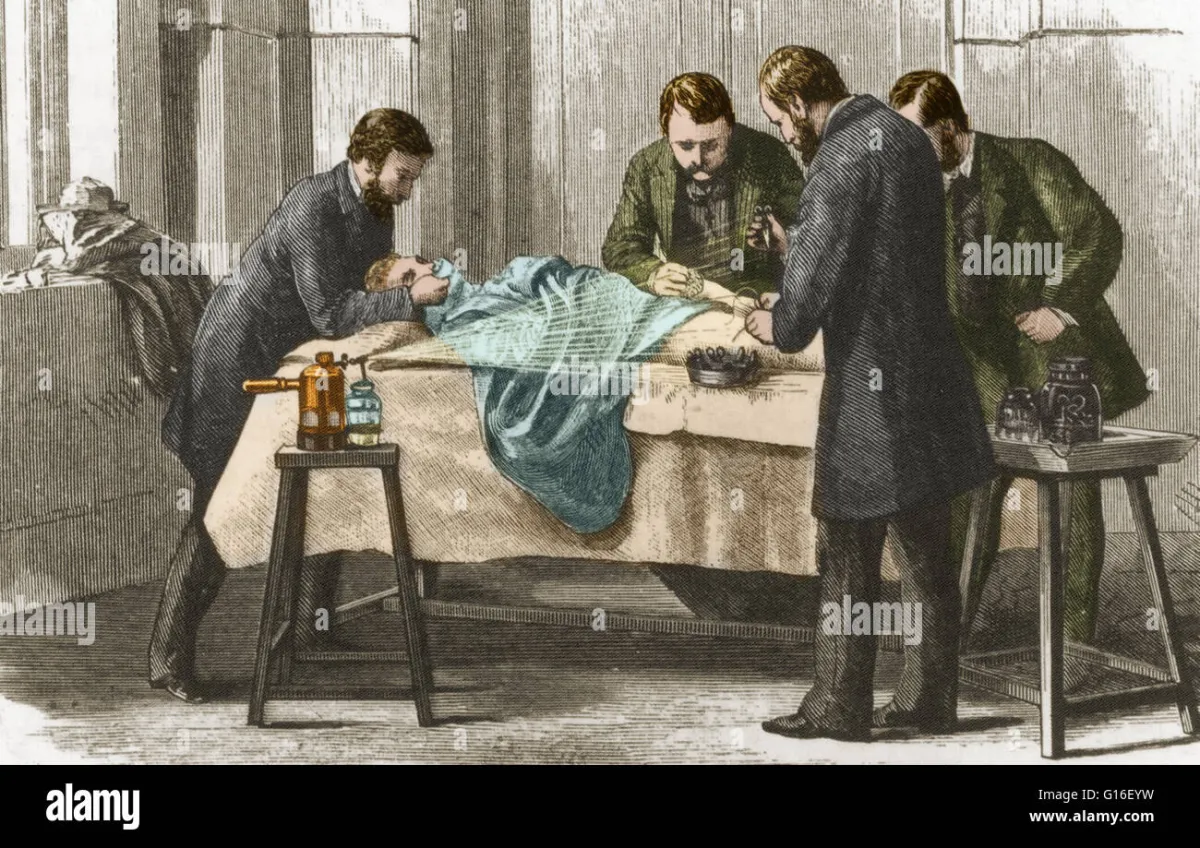 Photo: Joseph Lister, via c8.alamy.com
For decades, Listerine remained a niche medical product. Then in 1914, the Lambert Pharmaceutical Company bought the rights and faced a problem: how do you sell more antiseptic to a market that doesn't think it needs antiseptic?
Their solution was brilliant and manipulative. Instead of selling Listerine as medicine, they would sell it as social insurance.
Manufacturing Halitosis Anxiety
Lambert's advertising team dug through medical textbooks until they found an obscure term: "halitosis," the clinical word for bad breath. Most Americans had never heard it before, which was exactly what made it perfect for their purposes.
Starting in 1921, Listerine ads began appearing everywhere with headlines like "Often a bridesmaid, never a bride" and "The tragedy of halitosis." The ads told stories of promising careers destroyed, romances ruined, and social isolation caused by this terrible condition that the victim never knew they had.
The campaign was devastatingly effective because it exploited a fundamental human fear: that others were judging you for something you couldn't detect about yourself. Within seven years, Listerine's annual revenues jumped from $115,000 to over $8 million.
Lifebuoy's Body Odor Revolution
Seeing Listerine's success, Lever Brothers decided to apply the same strategy to soap. Their Lifebuoy brand had been marketed as a general health soap since 1894, but sales were mediocre.
In 1926, Lifebuoy launched what would become one of the most influential advertising campaigns in American history. They introduced the concept of "B.O." — body odor — as a social disease that could destroy your life.
The ads were melodramatic masterpieces of manufactured anxiety. They showed people being fired from jobs, rejected by romantic interests, and excluded from social circles because of body odor they couldn't smell themselves. The tagline "Even your best friends won't tell you" became embedded in American consciousness.
The Science of Shame
What made these campaigns so effective was their use of genuine psychological insights. The advertisers understood that Americans were becoming more socially mobile and status-conscious in the 1920s. People were moving to cities, working in offices, and interacting with strangers more than ever before.
This created new anxieties about social acceptance that advertisers could exploit. By suggesting that personal hygiene failures could derail your entire life, they tapped into deeper fears about fitting in and succeeding in modern American society.
The campaigns also used pseudo-scientific language to give their claims authority. Terms like "halitosis" and "B.O." sounded medical and serious, even though the "conditions" they described were largely normal human experiences that previous generations had accepted without shame.
How Marketing Rewired American Culture
The impact went far beyond selling soap and mouthwash. These campaigns fundamentally changed how Americans thought about their bodies and their relationships with others.
Before the 1920s, Americans generally assumed that if someone had a problem with how you smelled, they would tell you directly. The new advertising suggested that people would silently judge you and exclude you without explanation, creating a constant state of social paranoia.
This shifted American culture toward what sociologists call "other-directedness" — constantly monitoring yourself through imagined external judgment rather than relying on your own standards or direct feedback from others.
The Birth of the Personal Care Industrial Complex
By 1930, the success of halitosis and B.O. campaigns had spawned dozens of imitators. Companies began inventing new personal hygiene "problems" and selling products to solve them: dandruff shampoo, deodorant, foot powder, feminine hygiene products.
Each new product category followed the same playbook: identify a normal human condition, rebrand it as a social catastrophe, and sell anxiety relief in a bottle.
The strategy worked so well that by 1940, the average American household was spending more on personal care products than on healthcare. An entire industry had been built on convincing people they were naturally offensive to others.
The Lasting Legacy of Manufactured Insecurity
Today, Americans spend over $80 billion annually on personal care products, much of it driven by anxieties that didn't exist a century ago. The morning ritual of showering, brushing teeth, and applying deodorant feels natural and necessary, but it's actually the result of one of history's most successful psychological manipulation campaigns.
The irony is that while these products do provide genuine benefits, the social anxieties they were designed to address were largely fictional. Most interpersonal problems aren't caused by halitosis or body odor, but the advertising was so effective that Americans still behave as if they are.
The story of how marketers invented body odor anxiety reveals the power of advertising to shape not just what we buy, but how we think about ourselves and our relationships with others. Sometimes the most profound cultural changes come not from social movements or technological innovations, but from companies trying to sell us stuff we didn't know we needed.