The Bored Patient Who Accidentally Invented One of America's Most Familiar Rituals
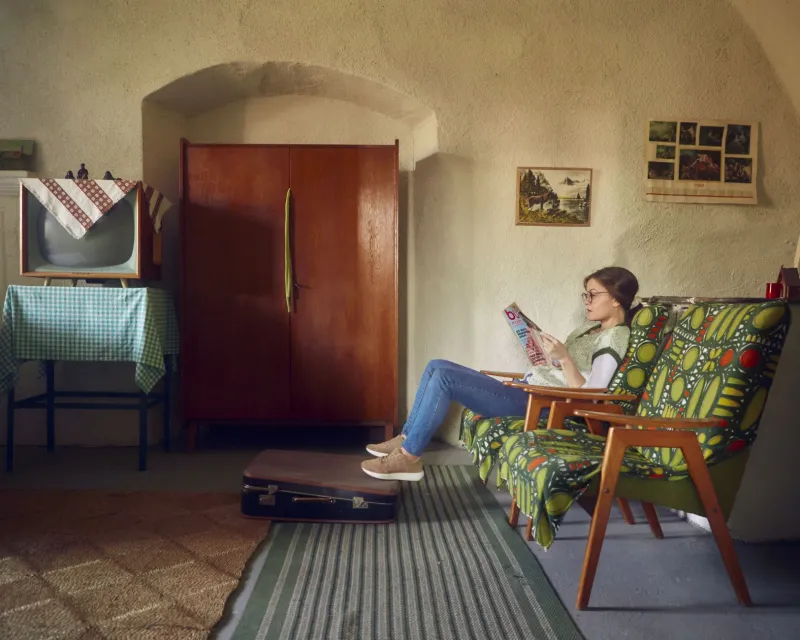
There's a particular kind of despair that sets in when you're sitting in a dentist's waiting room, staring at the ceiling, listening to the faint whir of a drill somewhere behind a closed door. You reach for the nearest magazine on the side table. It's from fourteen months ago. There's a celebrity on the cover you barely recognize. You read it anyway.
This is one of the most universal American experiences—and almost nobody has ever stopped to wonder how it started. Turns out, the waiting room magazine habit didn't grow out of some brilliant marketing strategy or a doctor's handbook. It emerged the way a lot of things do in American history: by accident, out of boredom, and because one person couldn't stand doing nothing.
Waiting Rooms Were Not Always a Thing
Before the early 20th century, the concept of a dedicated waiting room barely existed in medical settings. Patients showed up, were seen when the doctor was ready, and left. There wasn't much of a system. Physicians often worked out of their homes, and patients might sit in a hallway or on a porch bench. The idea of a formal anteroom where people would linger in limbo for extended periods was largely a product of growing urban medical practices in the late 1800s and early 1900s.
As cities expanded and professional medicine became more organized, waiting rooms became a practical necessity. Doctors started keeping appointment books. Offices grew busier. People found themselves sitting, sometimes for thirty minutes or more, with absolutely nothing to do.
For most of the late 19th century, that silence was just accepted. Patients waited. They stared at walls. They fidgeted. The idea that a business might be responsible for entertaining you while you waited for a service simply hadn't occurred to anyone yet.
The Dentist Who Got Tired of the Complaints
The story most historians of everyday culture point to—though the details have softened over time—traces back to dental offices in the northeastern United States around the turn of the 20th century. Dental visits were, by every account, an ordeal. Anesthesia was primitive, procedures were slow, and patients were often kept waiting in a state of mounting dread.
One particular dentist in New England, whose name varies depending on the source, reportedly grew so tired of patients complaining about the wait—and about the anxiety of hearing other patients' reactions through the walls—that he began leaving periodicals on the table in his waiting area. The logic was simple: give people something to focus on, and they'll spend less time working themselves into a panic.
It worked. Patients who had something to read were demonstrably calmer by the time they sat in the chair. Word spread among dental and medical professionals through informal networks. By the 1910s, leaving reading material in waiting areas had become a recognized if unofficial practice across American medical offices.
How Magazines Became the Default
Newspapers were the obvious first choice. They were cheap, widely available, and already part of daily American life. But newspapers had a problem: they were dated by the afternoon of the same day they were printed. A morning paper left in a waiting room felt stale by three o'clock.
Magazines, on the other hand, were designed to sit around. Their weekly or monthly publication cycles meant they didn't expire as quickly. They covered a range of topics—society news, politics, home life, entertainment—that appealed to a broad cross-section of patients. Publications like The Saturday Evening Post, Ladies' Home Journal, and later Life became fixtures on waiting room tables across the country.
There was also a subtle economics at play. Doctors and dentists discovered that pharmaceutical companies and magazine publishers were often willing to supply subscriptions at reduced rates or even for free, in exchange for the guaranteed eyeball time of a captive audience. The waiting room became, quietly, one of America's first content marketing channels.
The Ritual Spreads Beyond Medicine
By the 1940s and 1950s, the waiting room magazine had escaped the medical world entirely. Barbershops had always had a version of it—old newspapers and sports publications stacked near the chairs—but now the practice formalized. Law offices started keeping reading material in their lobbies. Insurance companies followed. Eventually, airport terminals picked up the habit, though they quickly evolved into full-blown newsstands rather than casual table piles.
The peculiar phenomenon of the outdated waiting room magazine also has its own logic. Early on, doctors and office managers discovered that patients were more likely to put down an old magazine mid-article when called in—meaning they'd leave it behind rather than pocket it. Current issues, people wanted to finish. Old issues, they'd abandon. The slightly stale magazine became a feature, not a bug.
Why We Still Do It—Even With Smartphones in Our Pockets
Here's the genuinely strange part of this story: the waiting room magazine has survived the smartphone era. Walk into almost any medical office in the United States today and the table in the corner still has its pile of slightly outdated periodicals. People. National Geographic. The occasional Sports Illustrated.
Some of it is habit—institutions are slow to change, and there's a comfort in the familiar. But researchers who study waiting room behavior have found something interesting: people in high-anxiety situations, like medical waiting rooms, often prefer a physical object to a screen. Flipping pages requires a kind of low-level physical engagement that scrolling doesn't quite replicate. It's grounding in a way that a phone, with all its notifications and demands, isn't.
So the next time you pick up a magazine in a dentist's office and discover it's from last spring, know that you're participating in a tradition that stretches back over a century—one that began not because anyone planned it, but because a dentist needed his patients to stop panicking. It worked then. Somehow, it still works now.