The Moment a Broken Register Changed the Unspoken Rules Between Shopkeepers and Strangers
When you stand at a checkout counter today—whether it's at a grocery store, a pharmacy, or a fast food restaurant—you can see exactly what's being rung up. The screen faces you. The prices appear in real time. You watch the total climb. This feels completely normal, almost unremarkable.
It wasn't always like this. For a long stretch of American retail history, the transaction between a merchant and a customer was fundamentally opaque. You handed over your goods, the shopkeeper worked the register, told you what you owed, and you paid. What happened on the other side of the counter was largely invisible—and largely taken on faith.
The shift toward transparency in retail didn't come from a government regulation or a consumer advocacy campaign. It came, like so many things in American commercial life, from a malfunction at the worst possible moment.
When the Merchant's Word Was the Only Receipt
To understand why this matters, you have to go back to the general store era of the 19th century. In small-town America, the local merchant was often a figure of considerable social authority. You bought what he stocked, at the prices he set, and you trusted his arithmetic. Credit was common, ledger books were handwritten, and the idea of a customer auditing a transaction in real time would have seemed almost rude.
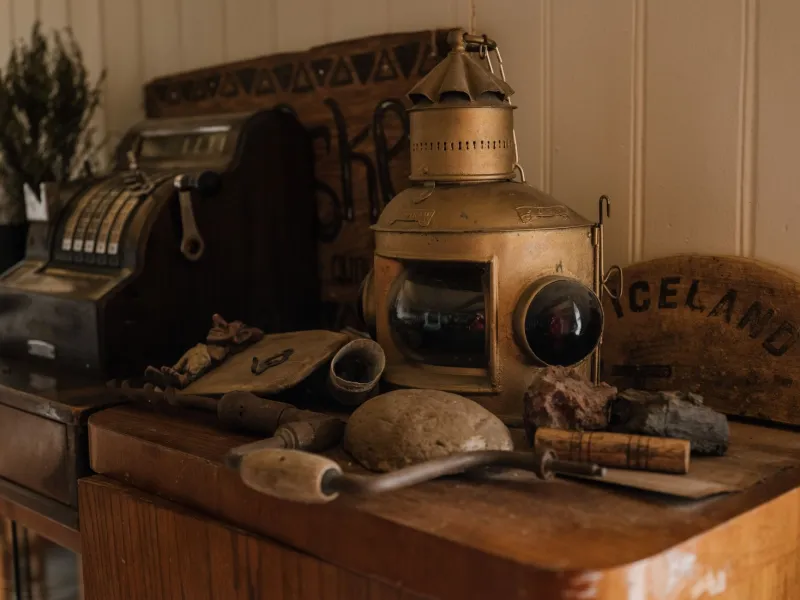
When mechanical cash registers arrived in the 1880s—most famously the models produced by the National Cash Register Company, founded by John Henry Patterson in Dayton, Ohio—they were sold primarily as tools for preventing employee theft, not customer deception. The register's job was to record transactions so the owner could verify that his clerks weren't pocketing cash. The customer's experience of the transaction was essentially an afterthought.
Early registers faced away from customers. The internal workings were enclosed. You heard the bell, you saw the drawer open, you got your change. The price you were charged was whatever the clerk said it was.
The Malfunction That Exposed Everything
The pivotal moment—one that retail historians have documented in various forms—occurred sometime in the first decade of the 20th century in a small dry goods or general merchandise store. The exact location is disputed, with accounts placing it variously in the Midwest or the mid-Atlantic states, but the core incident is consistent across sources.
A cash register malfunctioned in a way that caused the price display mechanism—normally locked away inside the machine—to become partially visible to the customer standing at the counter. The clerk, unaware of the exposure, rang up a total that didn't match what the customer could now partially see.
The customer called it out. There was a confrontation. The store owner, mortified and eager to resolve the situation without a scene, not only corrected the price but made a public show of the correction—turning the register so other customers could see the display.
The response from other customers in the store was immediate and remarkable. People who had never questioned a transaction before suddenly wanted to see the register. They wanted to watch the numbers appear. They wanted to know, in real time, what they were being charged.
NCR Sees an Opportunity
Word of incidents like this filtered back to the National Cash Register Company through its extensive network of salespeople. Patterson's organization was legendary for its sales force—one of the most sophisticated in early American business—and they were attuned to shifts in what merchants and their customers actually wanted.
By the early 1910s, NCR had begun designing registers with customer-facing displays built in. The logic was straightforward: if customers could see the transaction, they trusted the merchant more. And a customer who trusted the merchant spent more money. Transparency, it turned out, wasn't just ethically appealing—it was commercially smart.
The customer-facing receipt printer, which arrived later in the century, extended this logic even further. Now you didn't just see the transaction—you got a physical record of it to take home.
How Visible Transactions Reshaped the Store Itself
The shift toward transparency didn't stop at the register. It rippled through the entire architecture of retail. As customers became accustomed to seeing prices displayed openly—a practice that accelerated with the rise of supermarkets in the 1930s and 1940s—the expectation of visible, verifiable pricing became embedded in how Americans thought about shopping.
Price tags on individual items, shelf labels, and posted price lists all grew out of this evolving social contract. The customer's right to know—before the transaction, during it, and after it—became a foundational assumption of American retail culture.
Department stores began designing checkout areas specifically to make the transaction legible to passersby. Countertops became lower and more open. Glass display cases replaced solid wooden counters. The visual language of retail shifted from enclosure to exposure.
Trust as a Business Model
What's remarkable about this story is how a single broken machine helped codify something that now feels like a basic right: the right to see what you're paying for as you pay for it.
Modern point-of-sale systems have taken this further than any 19th-century shopkeeper could have imagined. Dual-screen terminals show customers an itemized breakdown in real time. Digital receipts land in your email before you've left the parking lot. Some self-checkout systems show you a live camera feed of your own items as they're scanned.
All of it traces back, in a roundabout way, to the moment a register broke at the wrong time—and a customer looked up and realized they could finally see what was actually happening on the other side of the counter. They liked what they saw. And they never agreed to look away again.