Before the Multiplex, There Was the Big Top: How the Circus Taught America to Watch Movies
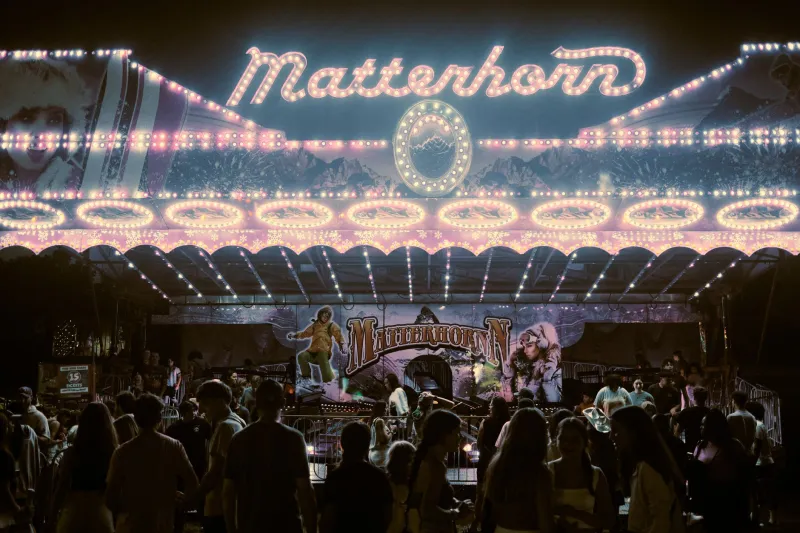
Think about the last time you went to the movies. You bought a ticket from a booth or a kiosk near the entrance. You walked into a large, darkened room. You found a seat among strangers. You sat quietly while something spectacular played out in front of you, and when it ended, everyone filed out together into the light.
That ritual feels completely natural to most Americans. It feels natural because it was rehearsed for decades before cinema ever existed — not in theaters, but in traveling circus and carnival tents that crisscrossed the country throughout the second half of the nineteenth century.
The movies didn't invent communal spectatorship in America. They inherited it.
The Tent Was the Original Theater
Before permanent entertainment venues were common outside major cities, the traveling circus was how most Americans experienced live performance on any significant scale. By the 1870s and 1880s, large circus operations like Barnum & Bailey were moving from town to town with extraordinary logistical precision, erecting massive canvas structures that could hold thousands of people, running multiple shows a day, and breaking everything down overnight to move to the next stop on the route.
 Photo: Barnum & Bailey, via r34porn.net
For rural and small-town Americans — which is to say, most Americans at the time — the circus tent was their primary experience of a purpose-built entertainment space. They understood the ticket window. They understood the usher who pointed them toward their section. They understood that once the lights dimmed and the performance began, you sat still and watched.
These were not obvious behaviors. They were learned. And the circus taught them to an entire nation over the course of several generations.
The Architecture of Anticipation
What circus operators had figured out — largely through trial and error and competitive pressure — was a physical grammar of entertainment that turned out to be almost perfectly transferable to cinema.
The tent entrance created a threshold. Crossing it meant leaving the ordinary world and entering a dedicated space for spectacle. The tiered seating arrangement — cheaper general admission on the outer benches, premium reserved seats closer to the ring — established a social and economic hierarchy that audiences understood intuitively. The circular or oval performance space meant that the action was always visible from every seat, which trained audiences to expect a clear sightline as a basic condition of the experience.
Perhaps most importantly, the darkness mattered. Circus tents were never fully dark the way movie theaters would become, but the contrast between the bright, lit performance space and the shadowed seating area created a psychological separation between performer and audience that audiences found both thrilling and comfortable. You were present but anonymous. You were part of a crowd but having a private experience.
When the first nickelodeons opened in the early 1900s, their owners were solving a design problem that circus operators had already solved.
The Carnival Midway and the Concession Stand
The influence ran deeper than architecture. The economic model of circus entertainment was built around ancillary spending — the money audiences spent before and after the main event was often as important as the ticket price itself.
The carnival midway, which lined the path from the entrance to the main tent, was a carefully designed gauntlet of food vendors, game operators, and novelty sellers. It existed to extract additional spending from audiences who were already in a festive, open-handed mood. Every element of the midway experience — the smells of popcorn and roasted peanuts, the bright lights, the sense of abundance and choice — was calibrated to loosen wallets.
Early movie theater owners, many of whom had direct experience in traveling entertainment, recognized this model immediately. The lobby concession stand was not a natural feature of a movie theater. It was a transplant from the midway. Popcorn, which became so synonymous with cinema that it's now hard to imagine one without the other, became a movie theater staple in the 1930s partly because vendors had been selling it at circuses and carnivals for decades. Audiences already associated the smell with the experience of communal entertainment.
The Showman's Instinct
Some of the earliest and most successful movie theater chains were built by men who had worked directly in circus and carnival operations. They understood crowd management, they understood how to create a sense of occasion around a ticketed event, and they understood the psychological value of the theatrical gesture — the ornate lobby, the uniformed staff, the velvet ropes.
The great movie palaces of the 1920s, with their baroque interiors and their deliberate sense of grandeur, were doing exactly what the circus had always done: using architecture and atmosphere to signal to the audience that what they were about to experience was worth their money and their time. The scale was different. The permanence was different. But the emotional logic was identical.
The Ritual That Outlasted Both
The traveling circus has largely faded from American life. The great tented shows that once drew thousands to county fairgrounds are mostly gone, replaced by arena productions and themed entertainment parks. The movie theater itself is under pressure from streaming services that have made it possible to watch almost anything at home.
And yet the ritual persists. Americans still buy tickets at a booth, still find their seats in a darkened room, still eat snacks they would never bother with at home, still experience something together with strangers and then disperse back into their separate lives.
That ritual is older than the movies. It was practiced under canvas, in fields, in towns that no longer exist, by people who never imagined the world their habits would help to build.
The circus is gone. Its blueprint is everywhere.