America's Cheerful Greeting Card Habit Started in a Funeral Parlor
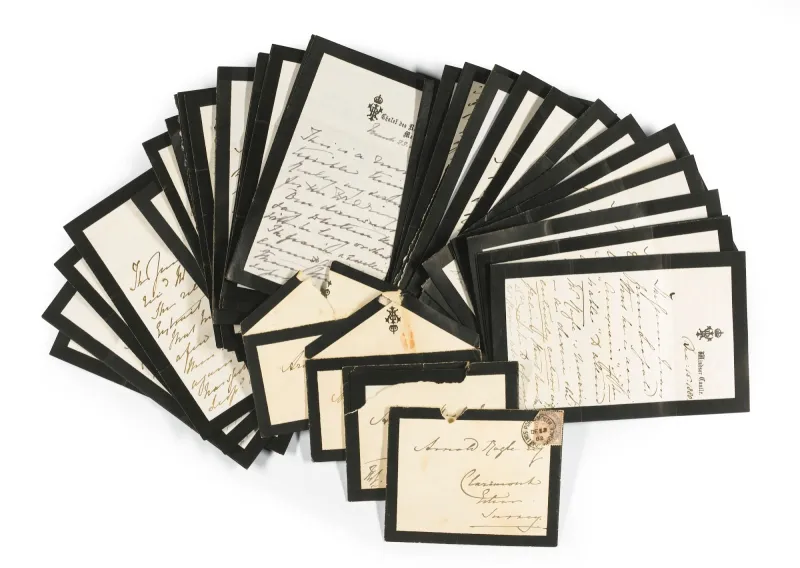
Photo: Victorian mourning stationery black border antique paper letters, via 1.bp.blogspot.com
America's Cheerful Greeting Card Habit Started in a Funeral Parlor
Walk into any drugstore in America and you'll find an entire aisle dedicated to cards. Birthday cards, anniversary cards, cards that say "thinking of you," cards that say "congratulations," cards with dogs wearing hats, cards with inspirational quotes in cursive fonts. The greeting card is so thoroughly woven into American social life that sending one feels almost instinctive — a reflex for marking moments that matter.
The industry that produces all of them generates somewhere north of eight billion cards a year in the United States alone. Hallmark, its most famous player, was founded in 1910 and grew into a company so culturally dominant that it has an entire cable network named after it.
None of this cheerful commercial machinery would exist without a Victorian obsession with elaborate death rituals — and a few opportunistic printers who realized that grief, properly packaged, was a product people would pay for.
How the Victorians Turned Mourning Into a Social Performance
When Queen Victoria's husband Prince Albert died in 1861, the British monarch entered a state of mourning so total and so prolonged — she wore black for the remaining forty years of her life — that it set the cultural tone for an entire era. Victorian mourning culture was already formalized before Albert's death, but the Queen's example transformed it into something closer to a competitive social obligation.
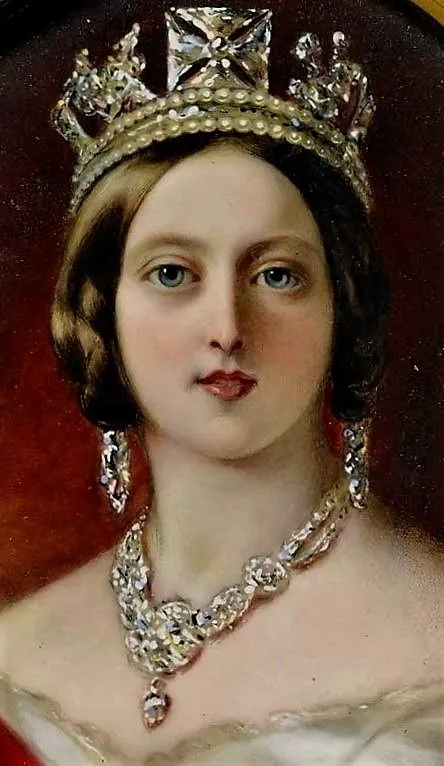 Photo: Queen Victoria, via i.pinimg.com
By the mid-nineteenth century, middle and upper-class Victorians on both sides of the Atlantic observed mourning through an elaborate system of visible signals. Widows wore specific fabrics and avoided certain colors for prescribed periods. Household mirrors were covered. And correspondence — all of it — was conducted on stationery with a thick black border printed around the edge.
This black-bordered mourning stationery wasn't a casual convention. It was a formal social requirement. Failing to use it when writing to someone after a bereavement was considered a genuine breach of etiquette, roughly equivalent to showing up to a funeral in bright colors. The border itself was calibrated to the depth of grief: a wider border indicated more recent or more significant loss, and the border would narrow as the mourning period progressed over months or years.
The demand for this stationery was substantial and consistent. Every print shop with access to the right papers and inks wanted a piece of it.
The Printers Who Saw Something Else
In the United States, Victorian mourning culture arrived with particular force after the Civil War. A conflict that killed somewhere between 620,000 and 750,000 Americans — touching nearly every family in the country — created an enormous, sustained market for grief-related goods and customs. Mourning stationery flew off printers' shelves throughout the 1860s and into the 1870s.
The commercial printers supplying this demand were, almost by definition, in the business of mass-producing emotionally significant paper. They had the presses, the distribution relationships, and — crucially — the experience of selling printed material that people bought specifically because it communicated a feeling they couldn't easily put into words themselves.
Louis Prang was the figure who most clearly saw where this could go. A German immigrant who had established a successful chromolithography business in Boston, Prang had built his reputation printing high-quality color reproductions of artworks. In 1874, he began producing what he called "Christmas cards" — small, elaborately colored printed cards designed to be sent as seasonal greetings. They were beautiful objects by the standards of the time, featuring flowers, birds, and holiday imagery printed in rich colors that ordinary Americans couldn't easily produce themselves.
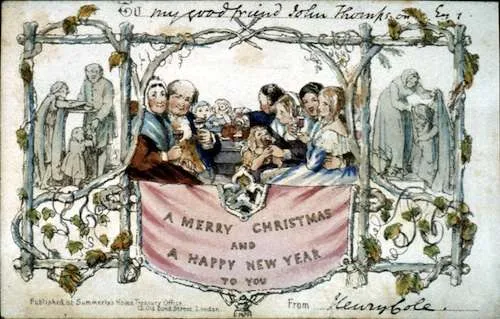 Photo: Louis Prang, via newenglandhistoricalsociety.com
Prang didn't invent the Christmas card from nothing. British printers had been experimenting with seasonal greeting cards since the 1840s. But he industrialized the concept for the American market, and he understood instinctively that the same social logic driving mourning stationery applied here: people wanted a formatted, produced way to communicate feelings that were real but hard to express from scratch.
By the 1880s, Prang's Christmas cards were selling in the millions. He ran design competitions to find new imagery, paid serious money to artists, and built a distribution network that reached department stores and stationers across the country. He is, with reasonable justification, called the father of the American greeting card industry.
From Condolence to Celebration
The pivot from mourning stationery to celebratory cards wasn't a sudden reinvention. It was a gradual commercial expansion driven by the recognition that the underlying product — a pre-formatted emotional message on decorated paper — was useful for more occasions than death.
Valentine's Day cards were among the first to follow Christmas into the mass market. The tradition of exchanging written valentines was already old, but handwritten notes required effort and skill. Printed cards democratized the gesture. By the 1880s and 1890s, Valentine's cards were a significant commercial category, and printers were actively looking for the next occasion to fill.
Birthday cards emerged more slowly, partly because birthday celebrations were less universally observed in the nineteenth century than they are today. But as the twentieth century approached and American consumer culture expanded, the birthday card found its footing. By the time Hallmark was founded in Kansas City in 1910 by Joyce Hall — who started by importing British postcards and quickly moved to producing original American cards — the infrastructure for a year-round greeting card industry was already in place.
The sympathy card, meanwhile, never went away. It quietly remained one of the industry's most reliable sellers, a direct descendant of the black-bordered mourning stationery that started the whole thing.
The Hidden Grief at the Center of Every Celebration
There's something worth sitting with in this origin story. The greeting card industry exists because Victorians needed a ritualized, formatted way to communicate grief — and because commercial printers were smart enough to recognize that the same need for emotional scaffolding applied to joy, affection, and celebration.
When you stand in that drugstore aisle trying to find exactly the right birthday card for someone you care about, you're participating in a tradition that began not with happiness but with loss. The industry found you through mourning, and then figured out that you'd need it for everything else too.
Eight billion cards a year, and almost none of them black-bordered. But the border was always there, somewhere underneath.