How the U.S. Military Quietly Decided That Orange Juice Belongs at Breakfast
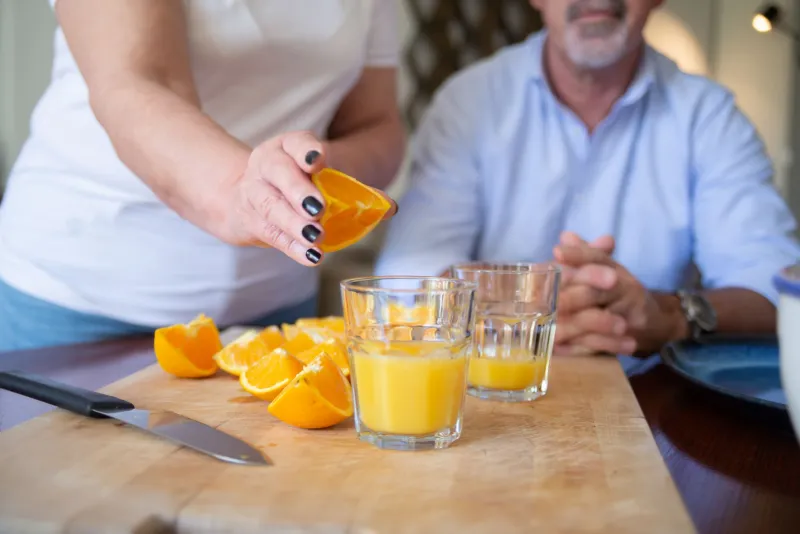
Pour yourself a glass of orange juice this morning and you're participating in a habit that feels ancient, natural, and nutritionally obvious. It is none of those things. The idea that orange juice is a mandatory part of the American breakfast — as automatic as coffee, as expected as eggs — is surprisingly recent, and it didn't come from nutritionists or chefs or even orange growers. It came from the Pentagon.
Orange Juice Was Not Always Breakfast
For most of American history, oranges were seasonal, regional, and expensive. Before refrigerated rail transport became reliable in the late 19th century, a fresh orange was a genuine luxury — the kind of thing children found in their Christmas stockings as a treat, not something sitting in a kitchen bowl on a Tuesday. Even as Florida's citrus industry expanded through the early 20th century, oranges were mostly eaten whole, not juiced. Squeezing them felt wasteful.
Fresh-squeezed juice did eventually appear on the tables of wealthier American households in the 1920s and 1930s, partly because of new mechanical juicers and partly because of early health messaging connecting citrus to vitality. But it was still a luxury item, not a staple. Working-class families didn't think of orange juice as breakfast. They thought of it as something other people had.
Then the war changed the math entirely.
The Military's Vitamin Problem
When the United States entered World War II, the armed forces faced a logistical challenge that had plagued armies for centuries: keeping soldiers healthy across enormous distances. Vitamin C deficiency — the condition that causes scurvy — had historically devastated military campaigns. The U.S. military was determined not to let it happen again.
Fresh citrus was obviously impractical for troops stationed in the Pacific, North Africa, or Europe. Canned juice existed but was heavy, bulky, and lost significant nutritional value during processing. The military needed something lightweight, stable, and genuinely effective at delivering vitamin C to men who were thousands of miles from the nearest orange tree.
In 1942, the USDA's Bureau of Agricultural and Industrial Chemistry began working on the problem in earnest. Researchers had been experimenting with concentrated juice for years without much success — previous versions tasted flat, metallic, or simply wrong. The breakthrough came in 1945, when a team of scientists at the Florida Citrus Commission, working in partnership with government researchers, developed a process that preserved the flavor by adding a small amount of fresh juice back into the concentrate after processing. They called the result "cut-back" juice, and it actually tasted like oranges.
The timing was almost cruel. The new product was perfected just as the war ended, which meant the military never deployed it at scale.
Minute Maid and the Peacetime Pivot
Here's where the story gets interesting. The technology existed, the infrastructure was being built, and Florida had enormous quantities of oranges. What was missing was a reason for ordinary Americans to buy frozen concentrate.
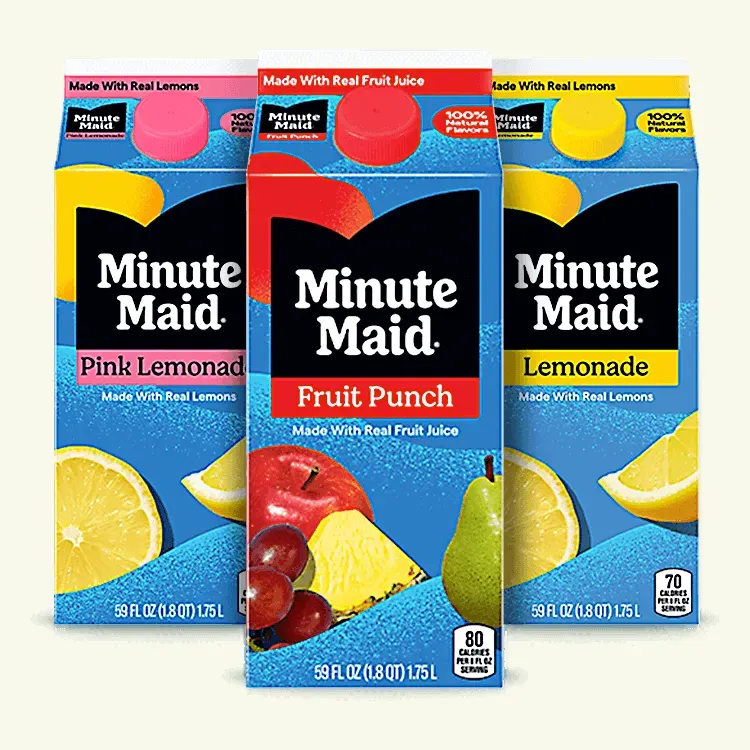 Photo: Minute Maid, via chefsbase.com
The National Research Corporation, which had developed the commercial version of the process, launched a brand called Minute Maid in 1946. The name was deliberate — it promised speed and simplicity to a postwar America that was being sold convenience at every turn. You pulled a can from the freezer, added water, stirred for a minute, and had juice. No squeezing. No mess. No waiting.
The USDA, which had invested heavily in the technology's development, had an obvious interest in seeing it succeed, and it used its considerable promotional reach to push the health messaging. Vitamin C was framed not just as a military concern but as a daily necessity for every American family. Pediatricians began recommending orange juice for children. Magazine advertisements showed glowing, healthy families pouring tall glasses of the stuff before school.
The campaign worked with remarkable speed. By the early 1950s, frozen concentrated orange juice was in freezers across the country. By the 1960s, a glass of OJ at breakfast had become so normalized that not having it felt like an oversight.
The Industry That Grew Around a Habit
What the wartime scientists and postwar marketers had actually created was a consumption habit with enormous commercial momentum. The Florida citrus industry expanded dramatically to meet demand, reshaping the state's economy and landscape. Refrigerated trucks became a standard feature of American food distribution infrastructure partly because of the need to move frozen concentrate. The "breakfast drink" category in American grocery stores exists, in a very direct sense, because of a 1940s government research program.
It's worth pausing on that. One of the most automatic rituals in American domestic life — the reflex to pour a glass of orange juice in the morning — was not a natural evolution of taste or tradition. It was a solution to a military logistics problem that got repackaged as a lifestyle choice.
Still Pouring, Mostly Out of Habit
Orange juice consumption in the United States has actually been declining since the 1990s, as nutritionists began pointing out that a glass of juice delivers a significant sugar hit without much fiber. Younger generations are increasingly skipping it. The habit, it turns out, was always more cultural than biological.
But for roughly five decades, the idea that breakfast wasn't complete without orange juice was as fixed in American life as anything could be. Kids grew up with it. Parents insisted on it. Diners served it automatically. All because a group of government scientists in the 1940s needed to figure out how to keep soldiers from getting scurvy — and the solution they found turned out to be more useful in peacetime than it ever was in war.