The Struggling Salesman Who Stood Up in a YMCA and Accidentally Built a Billion-Dollar Industry

Walk into any airport bookstore in America and you'll find an entire wall dedicated to a single proposition: that you can be better. Better at talking to people, better at managing your time, better at projecting confidence, better at closing deals. The self-help section is one of the most reliable fixtures in American retail, generating somewhere between $10 and $13 billion annually depending on who's counting. It is, by any measure, a genuine industry.
It was also, essentially, an accident. And it started in a rented room at a New York YMCA in 1912, with a young man from Missouri who just needed to pay his rent.
A Salesman with No Obvious Future
Dale Carnegie — born Dale Carnagey in 1888 in Maryville, Missouri — had not had an easy run of it by the time he arrived in New York in his early twenties. He'd grown up poor on a farm, worked his way through a state teachers college, tried and failed at selling correspondence courses and later bacon and lard for Armour & Company. He was, by his own account, anxious, uncertain, and deeply aware of the gap between who he was and who he wanted to be.
 Photo: Maryville, Missouri, via wondrousdrifter.com
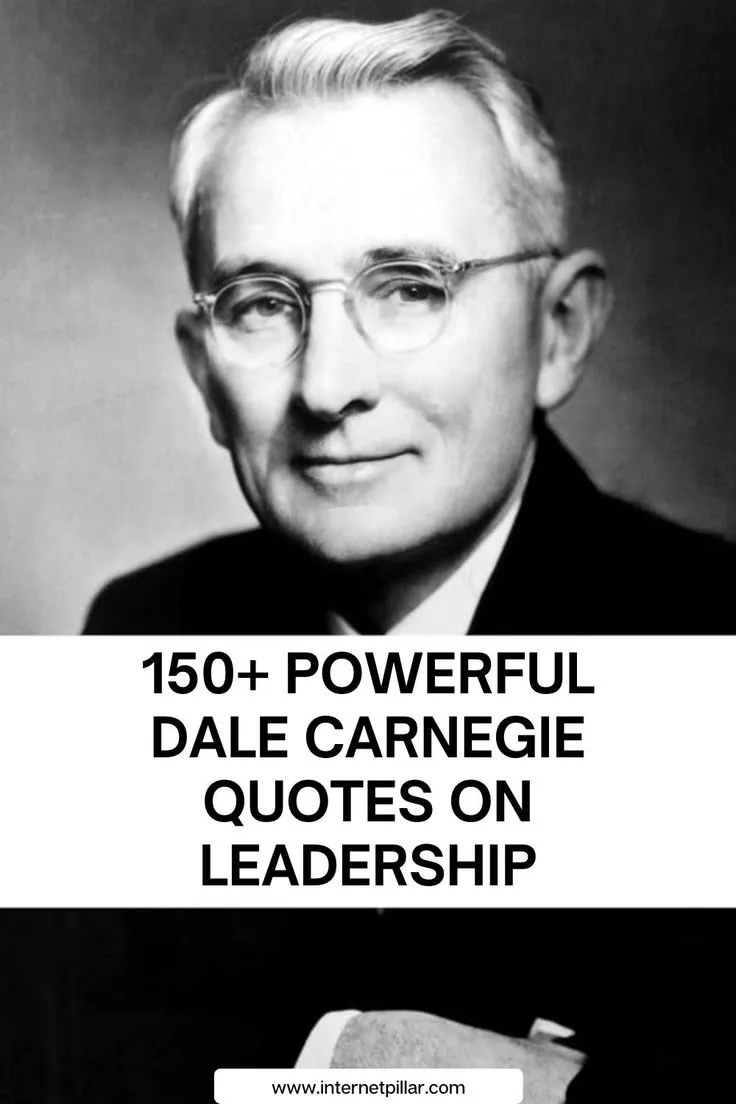 Photo: Dale Carnegie, via i.pinimg.com
What Carnegie did have was an unusual ability to talk to people — not in a slick, salesman way, but in a way that made them feel heard. He'd been interested in public speaking since college, where debate and oratory were among the few ways a farm kid without money could distinguish himself. He believed, with genuine conviction, that the ability to speak clearly and confidently was the single most undervalued skill in American working life.
In 1912, broke and casting about for a way to earn money in New York, he approached the 125th Street YMCA with a proposal: let him teach a class on public speaking in exchange for a share of the enrollment fees. The YMCA, skeptical that anyone would pay for such a thing, offered him a flat rate instead. Carnegie took the deal.
The Classroom That Changed the Format
The first class was small — a handful of businessmen and salesmen who were terrified of speaking in front of groups and knew it was costing them professionally. Carnegie had no formal curriculum and no textbook. He had his own experience, his observations about what made people freeze up and what loosened them, and a natural gift for making his students feel that improvement was genuinely within reach.
What he discovered in those early sessions reshaped his whole approach to the subject. Pure technique — where to stand, how to breathe, how to project — wasn't actually what his students needed. What they needed was to feel less afraid of other people. They needed to understand that the person across the desk or across the room was not a threat but a human being with their own anxieties and desires. The practical insight Carnegie kept returning to was simple: people respond to feeling genuinely appreciated and understood. If you made someone feel important, they were far more likely to work with you than against you.
It sounds obvious now. In 1912, it was genuinely radical to suggest that interpersonal warmth was a professional skill worth cultivating deliberately.
The classes grew. Word spread through New York's business community. Carnegie expanded to other cities. Over the following two decades, he refined and re-refined his material, keeping detailed notes on what resonated, what fell flat, and what stories his students found most useful. He had no particular intention of writing a book. The notes were for him.
The Book Nobody Planned
The publisher Leon Shimkin attended one of Carnegie's courses in 1934 and immediately recognized that the material was a book waiting to happen. He pushed Carnegie to compile his notes into a manuscript. Carnegie was reluctant — he was a teacher, not a writer — but eventually agreed.
How to Win Friends and Influence People was published by Simon & Schuster in 1936. The publisher was cautious enough to print only 5,000 copies in the first run. Within three months, it had sold 250,000. Within a year, it was one of the bestselling books in the country. It has now sold an estimated 30 to 45 million copies worldwide and has never gone out of print.
The book's genius was structural as much as philosophical. Carnegie organized his observations into numbered principles with memorable names. He illustrated each point with anecdotes — from Abraham Lincoln, from business leaders, from ordinary people his readers could recognize. He made self-improvement feel systematic rather than vague. You weren't just supposed to "be nicer" — you were supposed to follow specific, learnable steps that would produce specific, observable results.
That framework — the numbered principles, the illustrative stories, the promise of practical transformation — became the template that virtually every self-help book published since has followed. Think about it: Napoleon Hill's Think and Grow Rich (1937), Stephen Covey's The 7 Habits of Highly Effective People (1989), James Clear's Atomic Habits (2018). They all share Carnegie's basic architecture. The genre he accidentally invented has been endlessly reproduced for nearly ninety years.
Why It Landed So Hard
Carnegie's timing was significant. How to Win Friends appeared during the Great Depression, when millions of Americans were desperate for any advantage they could get. The idea that you could improve your circumstances through deliberate changes in behavior — without money, without connections, without luck — was enormously appealing to people who felt like they'd been stripped of control.
But the book's endurance suggests it touched something deeper than Depression-era anxiety. Americans have always been uncomfortable with the idea that success might be fixed, inherited, or inaccessible. The self-help genre, in its most fundamental form, is a recurring argument against fatalism. You can change. You can improve. The gap between who you are and who you want to be is closeable.
Carnegie didn't invent that idea. But he gave it a format, a set of practical handles, and a voice that felt like a friend rather than a lecturer. That combination turned out to be worth billions.
The Salesman's Lasting Sale
Dale Carnegie died in 1955, wealthy and widely recognized, having spent four decades teaching the same essential insight he'd stumbled onto in that first YMCA classroom: that other people are the key to everything, and that learning to treat them well is a skill, not a personality trait.
He'd started out trying to help nervous men keep their jobs. What he built, entirely without intending to, was the conceptual and commercial foundation of an industry that now fills entire sections of every bookstore in America — still selling, with remarkable consistency, the same basic promise he made in 1912. That you can be better. And that it's not as hard as you think.