Exploding Bottles, Mad Monks, and the Mistake We Now Toast With
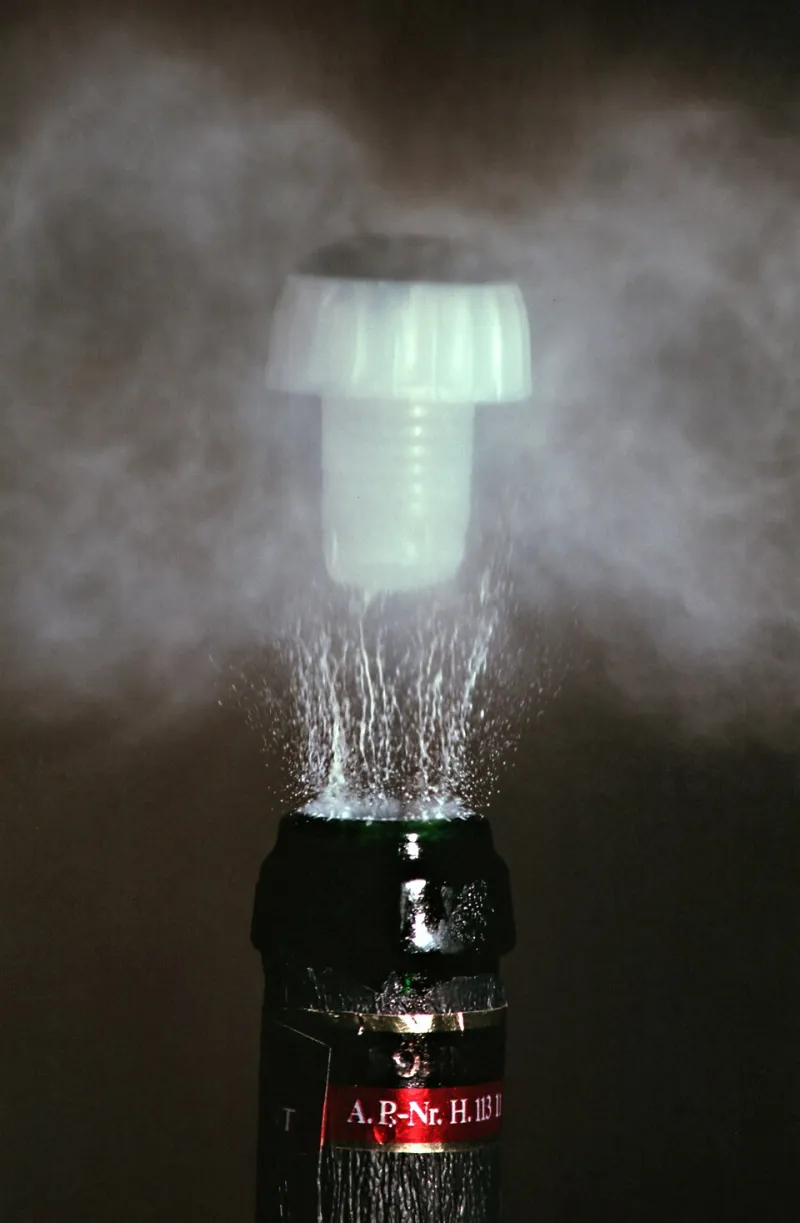
Photo: Hinnerk R / Hinnerk Rümenapf, CC BY-SA 4.0, via Wikimedia Commons
For most of wine's long history, bubbles were a defect. A sign something had gone wrong in the barrel. If a winemaker poured a glass and saw fizz, that was bad news.
Today, we pay $60 for the stuff.
The Wine That Kept Fighting Back
The Champagne region of northeastern France is cold. Really cold, by grape-growing standards. Winters there were so frigid that fermentation — the process where yeast eats sugar and produces alcohol and carbon dioxide — would simply stop partway through. The yeast went dormant, the wine seemed finished, and winemakers bottled it.
Then spring arrived.
Warmed by the weather, the yeast woke up in the bottle and resumed the job it had left unfinished. The carbon dioxide it produced had nowhere to go. Pressure built. A lot of it. Bottles shattered in cellars across the region, sometimes in chain reactions that could take out entire stacks. Workers wore heavy iron masks to protect their faces when descending into the cellars. Winemakers weren't crafting a luxury product. They were containing a slow-motion explosion.
No one wanted this wine. English merchants buying from Champagne actually had to account for the fact that a percentage of every shipment would arrive as shards of glass.
The Monk Who Didn't Invent It
Here's the twist in the story most people half-know: the famous name attached to champagne — Dom Pérignon, a 17th-century Benedictine monk — spent much of his career trying to eliminate bubbles, not create them. He was a gifted blender of wines, a quality-control man for his abbey, and the fizz was his enemy.
What he and others did accomplish was figuring out how to make the problem survivable. Stronger, thicker English glass helped — England's coal-fired furnaces produced sturdier bottles than French wood-fired ones. Cork stoppers, borrowed from Spanish winemakers, replaced sloppy cloth plugs that let pressure escape (or didn't, which was worse). Eventually, winemakers stopped fighting the bubbles and started managing them: adding measured sugar and yeast to create predictable carbonation, a process later called méthode champenoise.
By the 1800s, the defect had become the product.
Crossing the Atlantic
Champagne arrived in America as a status import, but its real breakthrough here wasn't about taste. It was about marketing.
In the 19th century, Champagne houses like Veuve Clicquot and Moët realized something clever: their product had no natural occasion. Nobody drinks champagne with dinner. So they invented occasions. They paid for champagne to be poured at grand openings, ship launches, and society weddings. They made sure the bottle appeared in paintings and, later, photographs of celebrations. The message was subtle but relentless: this is what success looks like when it's photographed.
American distributors took it further. Champagne got splashed across New Year's Eve toasts, Super Bowl locker rooms, and wedding receptions from Reno to Rhode Island. The pop of the cork became a sound effect for happiness itself — a piece of audio branding no one had to pay for anymore, because we'd all absorbed it.
Why We Still Pop It
There's a reason the ritual stuck, and it's built into the physics. The cork's dramatic exit, the spray, the fizz in the glass — champagne is the only drink that comes with its own fireworks. A bottle of wine announces itself quietly. Champagne demands attention, and celebrations are, at their core, demands for attention.
So the next time you brace yourself for that cork, remember: you're handling a centuries-old safety problem that somebody's great-great-grandfather solved with thicker glass and a better cork. The bubbles were never the plan.
They were the accident. We just decided to toast to it.