The Four-Month Crisis That Rewrote America's Social Rules Forever
When Handkerchiefs Became Weapons
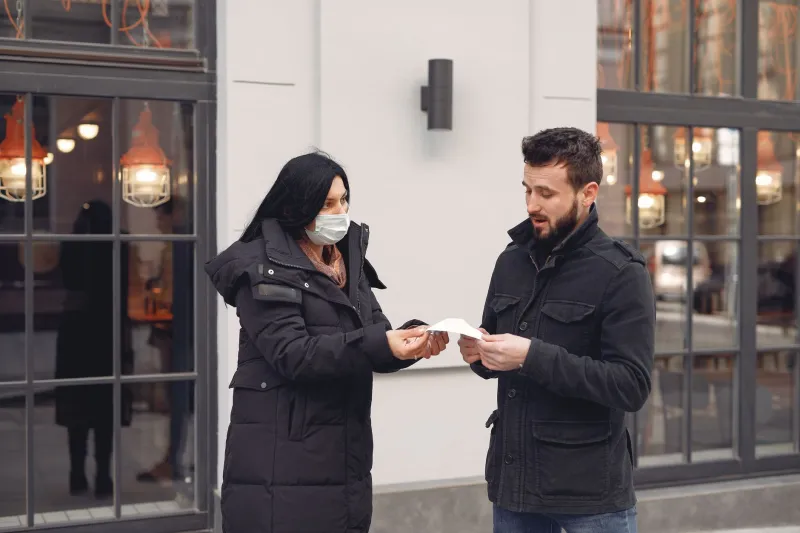
On October 13, 1918, the city of San Francisco did something unprecedented in American history: it made showing your face in public illegal. Anyone caught without a mask faced a $5 fine—equivalent to about $100 today. Within weeks, similar ordinances appeared in cities from coast to coast, transforming the simple act of covering one's mouth from a polite suggestion into a matter of civic duty.
 Photo: San Francisco, via primary.jwwb.nl
The 1918 influenza pandemic didn't just kill an estimated 675,000 Americans—it fundamentally rewrote the social contract around personal hygiene, public health, and individual responsibility in ways that would echo through the next century.
The Etiquette Revolution
Before 1918, American social norms around coughing and sneezing were surprisingly relaxed. Victorian etiquette books focused on table manners and proper introductions but said little about respiratory hygiene. Spitting was still common in public spaces, and covering one's mouth when coughing was considered more about politeness than health.
The flu changed everything almost overnight. Public health campaigns launched an aggressive education blitz teaching Americans new social behaviors: the "elbow cough," proper handkerchief technique, and the radical idea that your respiratory droplets were everyone's business.
Newspapers published detailed diagrams showing the "proper American sneeze"—into a handkerchief, turned away from others, followed by immediate hand washing. What had been optional courtesy became mandatory citizenship.
Mask Culture, American Style
The mask mandates revealed fascinating regional differences in American compliance culture. West Coast cities embraced masking with almost military precision—San Francisco's "mask slackers" faced public shaming campaigns and vigilante enforcement by ordinary citizens.
Meanwhile, many East Coast cities saw organized resistance. New York's Anti-Mask League held rallies in Central Park, arguing that face coverings violated constitutional freedoms and American traditions of open discourse. Sound familiar?
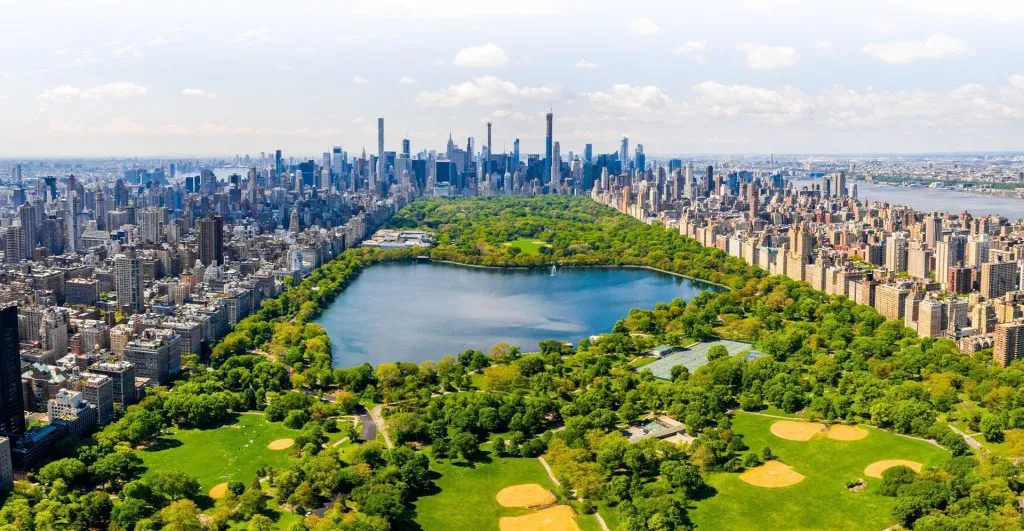 Photo: Central Park, via www.turismoeeuu.com
The masks themselves became cultural artifacts. Working-class Americans often wore simple cloth coverings, while wealthy families commissioned elaborate silk masks with decorative embroidery. Some featured patriotic designs—stars and stripes masks became a way to signal both health consciousness and national loyalty.
The Great Unmasking
By late 1919, as the pandemic waned, something curious happened: Americans couldn't wait to stop masking. Unlike many Asian countries, where mask-wearing during illness became a permanent cultural norm, the United States experienced what historians call "mask fatigue syndrome."
Cities repealed their ordinances with celebration parades. San Francisco held a "mask burning" ceremony in Union Square, where thousands of face coverings went up in flames as crowds cheered. The message was clear: masks represented crisis, and Americans wanted to return to "normal" as quickly as possible.
 Photo: Union Square, via i.pinimg.com
The Hygiene Revolution That Stuck
While mask-wearing faded, other pandemic-era innovations became permanent fixtures of American life. The 1918 crisis established hand-washing stations in public buildings, created the expectation that sick workers would stay home, and normalized the idea that personal hygiene was a public health responsibility.
Schools began teaching "health habits" as part of the curriculum—lessons about covering coughs, avoiding shared drinking cups, and maintaining "social distance" (a term that actually originated in 1918 public health guidance). These practices became so ingrained that by the 1950s, most Americans couldn't remember a time when they weren't considered common sense.
The pandemic also accelerated the decline of certain social customs. Handshaking became less universal, public water fountains were redesigned with sanitary features, and the practice of sharing food from common dishes largely disappeared from American dining culture.
When History Repeated Itself
The COVID-19 pandemic revealed how thoroughly Americans had forgotten their own masking history. The fierce debates over face coverings in 2020 followed almost identical patterns to 1918: regional differences in compliance, constitutional arguments about personal freedom, and the same tension between individual rights and collective responsibility.
Even the language was remarkably similar. The 1918 "mask slackers" became 2020's "anti-maskers." The 1919 "mask burning" ceremonies found their echo in modern "unmask our kids" rallies.
The Persistence of Crisis Habits
Perhaps most tellingly, both pandemics demonstrated Americans' complicated relationship with temporary measures. The 1918 generation eagerly abandoned masks but kept the hand-washing, social distancing, and respiratory etiquette that had proven effective.
Today, we're seeing similar patterns. While mask mandates have largely ended, many Americans have retained pandemic-era habits around personal space, hand sanitizing, and staying home when sick—suggesting that some social changes outlast the crises that created them.
Why This Pattern Matters
The story of America's masking culture reveals something fundamental about how social norms evolve. Major crises can transform everyday behavior almost instantly, but which changes become permanent depends less on their effectiveness than on how well they align with existing cultural values.
Americans embraced hygiene practices that emphasized individual responsibility but resisted collective measures like mask-wearing that required ongoing social coordination. We kept the parts of pandemic culture that felt like personal improvement and abandoned the parts that felt like social obligation.
Understanding this pattern helps explain not just our pandemic responses, but how American society adapts to any major crisis—and why some changes stick while others fade as quickly as they appeared.