The High-Altitude Ink Crisis That Changed How Americans Write

When Ink Became a Matter of Life and Death
In 1943, American bomber crews flying over Europe had a problem that could kill them: their pens wouldn't work. At 30,000 feet, fountain pens leaked ink all over navigation charts, making them unreadable. In humid Pacific jungles, the same pens would skip and smear, turning crucial military communications into illegible messes.
The U.S. Army Air Forces needed a pen that could write anywhere, under any conditions. What they got was a Hungarian journalist's forgotten invention that would eventually end up in every American's pocket.
The Journalist Who Hated Smudged Newspapers
László Bíró wasn't trying to help the military when he invented the ballpoint pen in 1938. He was just a frustrated newspaper editor in Budapest who was tired of fountain pen ink smudging on freshly printed pages. Watching kids play with marbles, he had a simple idea: what if a pen used a tiny ball to distribute ink instead of a messy nib?
 Photo: László Bíró, via i.ytimg.com
Bíró's design was brilliant but ignored. European pen manufacturers weren't interested in his "ball pen." They'd spent decades perfecting fountain pens — why would anyone want a cheap alternative? When World War II broke out, Bíró fled to Argentina, his patent gathering dust.
Meanwhile, American pilots were literally dying because they couldn't read their ink-stained maps.
The Businessman Who Bet Everything on a Ball
Milton Reynolds was a Chicago entrepreneur looking for his next big score when he spotted Bíró's ballpoint pen in a Buenos Aires store in 1945. Reynolds immediately understood what European manufacturers had missed: this wasn't just a pen, it was the future of writing.
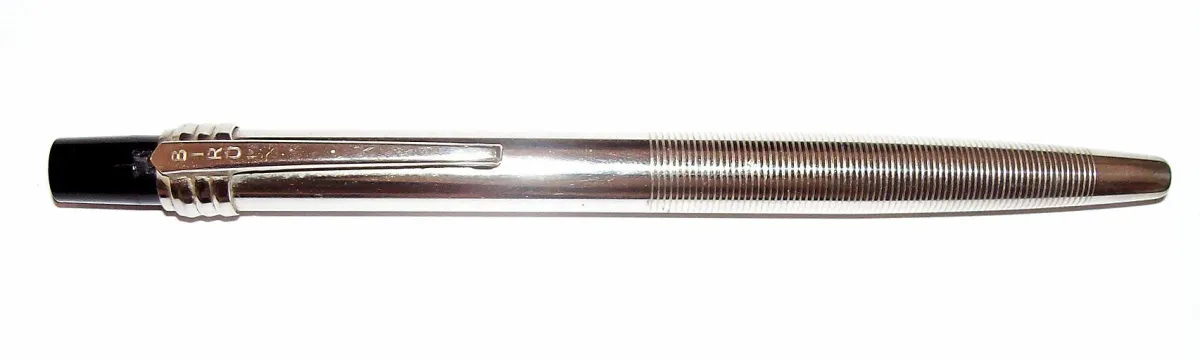 Photo: Milton Reynolds, via inkymemo.com
Reynolds rushed back to Chicago and reverse-engineered Bíró's design, making just enough changes to avoid patent infringement. He had one crucial insight that even Bíró hadn't fully grasped: American consumers would pay premium prices for convenience.
The $12 Pen That Stopped Traffic
On October 29, 1945, Reynolds launched the "Reynolds Rocket" at Gimbels department store in New York City. The price was outrageous: $12.50, equivalent to about $185 today. For comparison, a quality fountain pen cost around $3.
Reynolds marketed it as a luxury item that could "write underwater, upside down, and at any altitude." The military connection was obvious — this was the pen that could have saved those bomber crews. On the first day, Gimbels sold 10,000 pens. Crowds lined up around the block.
Americans had never seen anything like it. No refilling, no blotting, no smudging. You could write immediately without warming up the ink. The ballpoint pen was everything the fountain pen wasn't: instant, reliable, and foolproof.
The Price War That Put Pens in Every Pocket
Reynolds' success triggered a ballpoint pen gold rush. Dozens of companies jumped into the market, each claiming their version was superior. Prices plummeted as competition intensified. By 1950, you could buy a ballpoint pen for 50 cents. By 1960, they cost a quarter.
The price war had an unintended consequence: it democratized writing. Suddenly, every student, office worker, and homemaker could afford multiple pens. You could lose one and not care. You could lend one and forget about it. Pens became disposable for the first time in human history.
How Ball Bearings Rewrote American Life
The ballpoint pen didn't just change how Americans wrote — it changed what they wrote. Fountain pens required careful, deliberate penmanship. Ballpoints were forgiving. You could write quickly, casually, even carelessly. The technology encouraged a more relaxed relationship with the written word.
Teachers noticed that students' handwriting became less formal. Business correspondence grew more informal. The ballpoint pen was part of a broader cultural shift toward casualness that would define post-war America.
Offices embraced ballpoints because they eliminated the ritual of fountain pen maintenance. No more ink bottles, no more blotting paper, no more careful cleaning. Workers could focus on their jobs instead of their tools.
The Accidental Revolution
Nobody planned for the ballpoint pen to reshape American writing culture. Bíró just wanted to solve a personal problem with smudged newspaper ink. The military just needed pens that worked at high altitude. Reynolds just wanted to make money on a clever product.
But together, their separate needs created something larger: a writing revolution that made putting words on paper easier, cheaper, and more accessible than ever before. The ballpoint pen turned writing from a careful craft into a casual activity.
The Tool That Outlasted Its Crisis
Today, Americans write with ballpoint pens without thinking about the wartime crisis that created them. We've forgotten that this simple tool was once a luxury item that stopped traffic in Manhattan, or that it was born from a life-and-death need for reliable ink at 30,000 feet.
The ballpoint pen succeeded because it solved a problem most people didn't know they had. Americans had accepted the limitations of fountain pens because they'd never imagined an alternative. Once they experienced the convenience of ball-bearing ink distribution, there was no going back.
Sometimes the most transformative innovations come from the most practical needs. A journalist who hated smudges, pilots who needed reliable navigation, and a businessman who saw opportunity in a foreign patent combined to give America a writing tool that was so simple and effective, we now take it completely for granted.