The Industrial Kitchen Machine That Accidentally Killed the Family Dinner
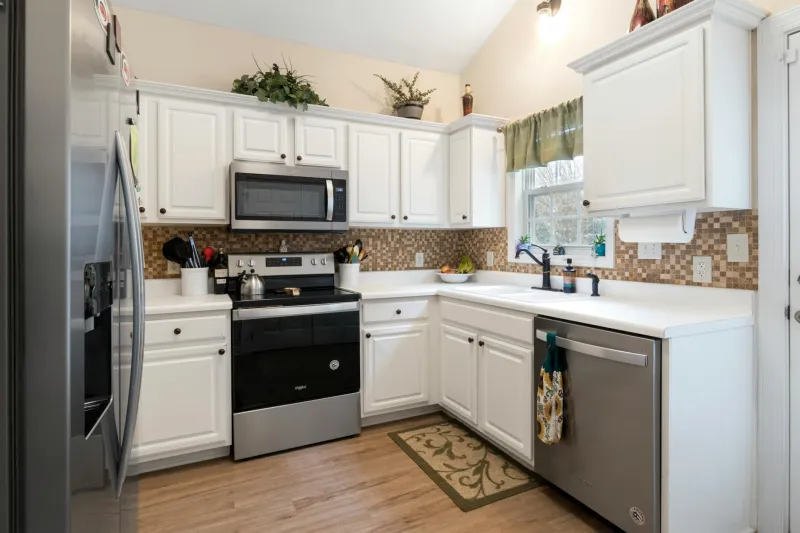
The Six-Foot Monster in Restaurant Kitchens
In 1967, the Amana Radarange microwave oven stood six feet tall, weighed 750 pounds, and cost $3,000 — about $25,000 in today's money. It was designed for commercial kitchens, military submarines, and high-end restaurants that needed to reheat food quickly during busy service. Nobody at Amana imagined it sitting on a suburban kitchen counter next to the toaster.
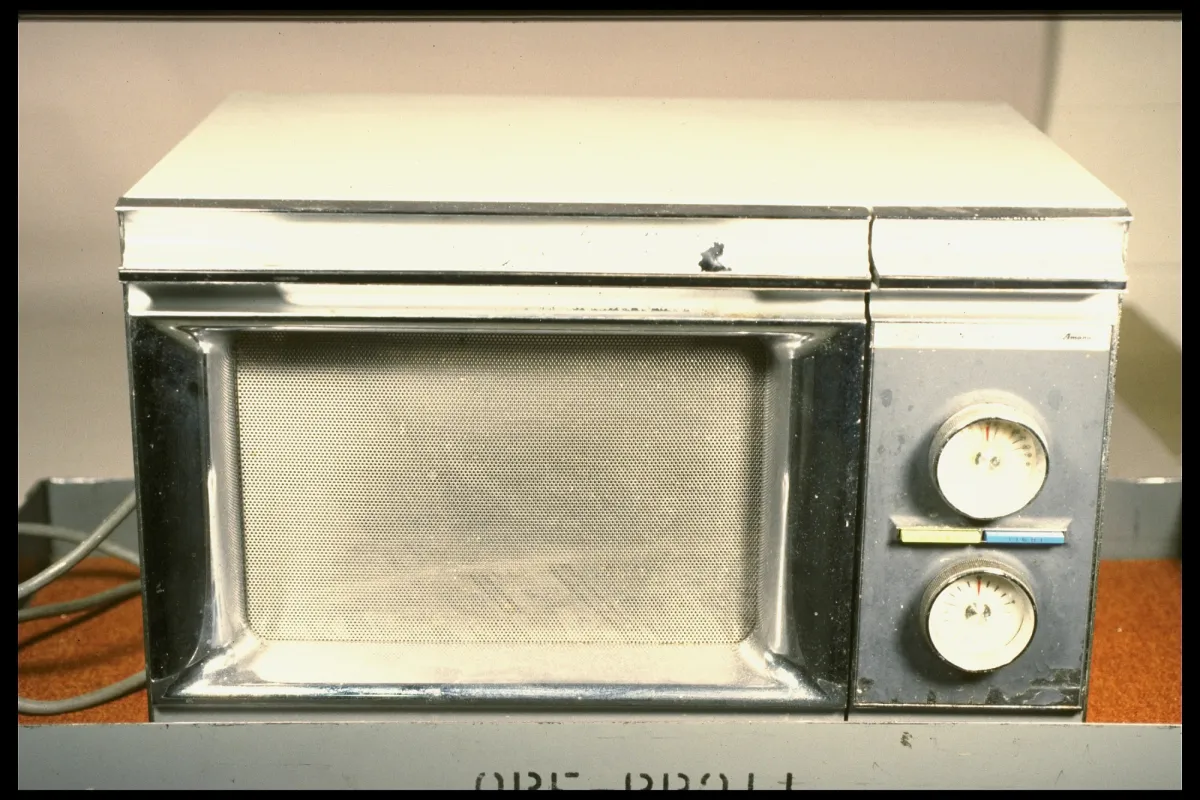 Photo: Amana Radarange, via ids.si.edu
The microwave wasn't even supposed to be a consumer product. It was industrial equipment, like a commercial dishwasher or a walk-in freezer. The idea that regular families would want one seemed absurd — who needed to cook food that quickly at home?
That assumption would prove to be spectacularly wrong.
When Radar Technology Met Leftover Meatloaf
The microwave's origin story starts with Percy Spencer, a Raytheon engineer working on military radar systems during World War II. In 1945, Spencer noticed that a chocolate bar in his pocket had melted while he was testing a magnetron — the device that generates microwave radiation for radar.
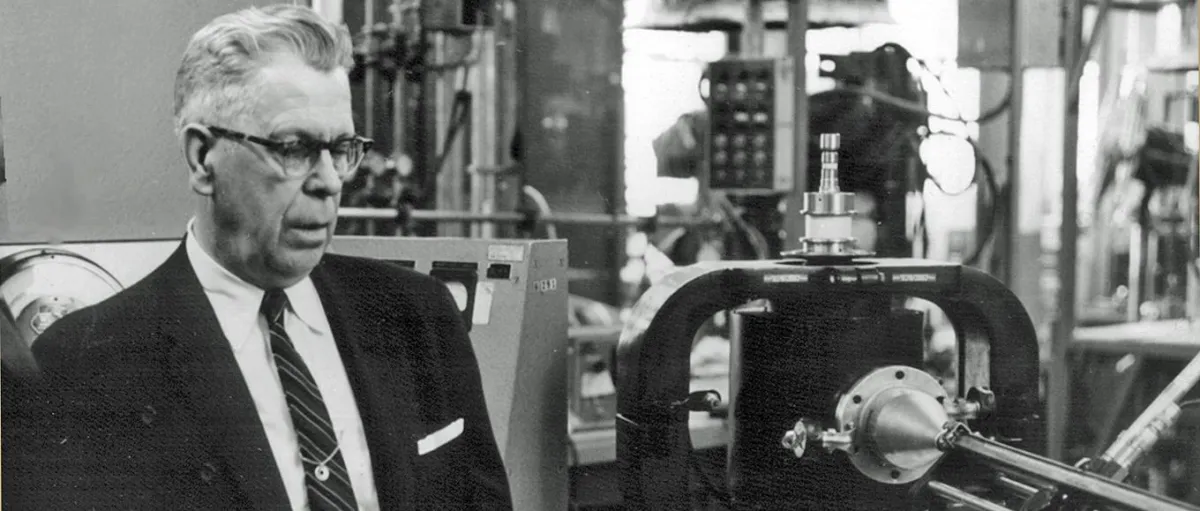 Photo: Percy Spencer, via www.massmoments.org
Spencer's accidental discovery led to the first microwave oven in 1947, but it was purely a commercial machine. The Radarange was marketed to restaurants, airlines, and military facilities that needed to heat large quantities of food quickly. Home cooking wasn't even a consideration.
For twenty years, microwaves remained in professional kitchens, quietly revolutionizing the food service industry while American families continued cooking the traditional way.
The Shrinking Machine That Changed Everything
By the late 1960s, advances in electronics had shrunk the microwave to countertop size. Amana introduced the first home microwave in 1967, but at $495 (about $4,200 today), it was still a luxury item for wealthy early adopters.
The marketing was confused and unconvincing. Amana promoted the microwave as a "speed cooking" device that could prepare entire meals in minutes. Advertisements showed families gathering around perfectly cooked roasts and elaborate casseroles that had supposedly been "microwaved" to perfection.
American families weren't buying it — literally. Sales were slow, and many retailers questioned whether there was really a market for expensive speed-cooking machines.
The Price War That Opened Suburban Kitchens
Everything changed in the mid-1970s when Japanese manufacturers entered the American microwave market. Companies like Sharp and Panasonic could produce microwaves more cheaply than American manufacturers, triggering a price war that drove costs down dramatically.
By 1975, you could buy a microwave for under $300. By 1980, basic models cost less than $200. Suddenly, middle-class families could afford what had once been restaurant-grade equipment.
But Americans still didn't know what to do with their new appliances.
The Reheating Revolution Nobody Planned
The microwave's true purpose emerged organically, not through marketing campaigns. Families discovered that the machine excelled not at cooking elaborate meals, but at reheating leftovers. Last night's pizza, yesterday's Chinese takeout, this morning's coffee — the microwave made it all instantly edible again.
This was revolutionary in ways nobody had anticipated. For the first time in human history, families could eat different meals at different times without any cooking effort. Dad could heat up leftover lasagna at 6 PM while Mom warmed chicken nuggets for the kids at 7 PM and teenage siblings could reheat pizza at 9 PM.
The microwave didn't just change how food was prepared — it eliminated the need for families to coordinate mealtime at all.
The Slow Death of Dinnertime
By the 1980s, the microwave had become the symbol of American convenience culture. Frozen dinners, designed specifically for microwave cooking, filled supermarket aisles. Brands like Lean Cuisine and Hot Pockets built entire business models around microwave-ready foods.
The traditional family dinner — where everyone gathered at the same time to eat the same meal — began to disappear. Why wait for everyone to come home when you could heat up individual portions whenever it was convenient?
Sociologists started noticing that families were eating together less frequently. The microwave, combined with increasingly busy schedules and the rise of after-school activities, made it easier for family members to eat separately rather than coordinate shared mealtimes.
The Convenience That Fractured Connection
The microwave solved a problem American families didn't realize they had: the inconvenience of reheating food. But in solving that problem, it accidentally created a new one: the gradual erosion of shared family time.
Before microwaves, reheating food required effort — using the oven or stovetop, waiting for food to warm through properly. That effort naturally encouraged families to eat together when the food was ready. The microwave removed that natural coordination point.
Restaurant chains noticed the change too. Fast-casual dining exploded in the 1980s and 1990s, catering to families who were increasingly comfortable eating different meals at different times. The idea of shared family dining was becoming optional rather than essential.
The Machine That Rewired Mealtime
Today, 90% of American households own a microwave, but most people use them almost exclusively for reheating rather than cooking. The machine that was designed to revolutionize meal preparation instead revolutionized meal timing, giving families the freedom to eat whenever they wanted.
That freedom came with unexpected costs. Child development experts link the decline of family dinners to increased behavioral problems and decreased academic performance. Nutritionists point to the rise of processed, microwave-ready foods as a contributor to America's obesity epidemic.
The Unintended Consequences of Convenience
Amana's engineers never intended to disrupt family dining traditions. They just wanted to make a smaller, cheaper version of their restaurant equipment. But by making reheating effortless, they accidentally removed one of the last coordinating forces that brought families together daily.
The microwave oven represents the double-edged nature of convenience technology. It solved real problems — saving time, reducing food waste, making meal preparation easier. But it also quietly transformed social customs in ways nobody predicted or planned.
Sometimes the most profound cultural changes happen not through grand social movements, but through simple machines that make everyday life a little more convenient. The microwave didn't set out to change how American families eat together. It just made it easier for them to eat apart.