When Railroad Workers Turned a Throwaway Song Into America's Universal Knock
The Rhythm Everyone Knows
You've heard it thousands of times. Someone knocks on your door with that distinctive pattern: tap-tap-tap-tap-tap, pause, tap-tap. Or maybe a car horn honks it in traffic. Your brain instantly recognizes it, even expects the final two beats. But where did this peculiar rhythm come from, and how did it become so deeply embedded in American culture that we use it without thinking?
The answer traces back to a piece of sheet music gathering dust in 1899 Chicago, and a group of railroad workers who had no idea they were creating a cultural phenomenon.
A Ragtime Reject Finds New Life
The original song was called "Shave and a Haircut," written by Charles Hale for the ragtime craze sweeping America at the turn of the century. It was supposed to be a catchy little ditty about barbershop life, complete with lyrics about getting spruced up for a night on the town. The problem? Nobody particularly cared about it.
 Photo: Charles Hale, via cdn.britannica.com
Ragtime publishers churned out hundreds of songs hoping to catch the next big trend. Most disappeared into obscurity, and "Shave and a Haircut" seemed destined for the same fate. The melody was simple, almost childish, and the lyrics were forgettable. Music stores barely bothered to stock it.
But something interesting happened to that throwaway tune as it made its way into working-class America.
Railroad Workers Make It Their Own
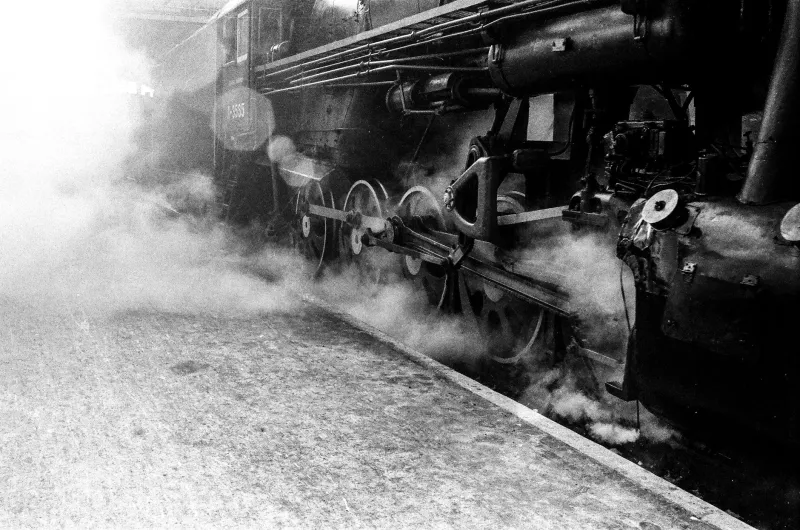
In the early 1900s, railroad work was dangerous, noisy, and isolated. Workers developed their own communication systems using whatever tools they had available. They tapped on rails to signal each other, used whistle patterns to coordinate train movements, and created rhythmic codes for everything from meal breaks to shift changes.
Somewhere along the sprawling rail networks crisscrossing America, workers started tapping out that catchy rhythm from Hale's forgotten song. The pattern was perfect for their needs: distinctive enough to cut through industrial noise, simple enough to remember, and just complex enough to avoid confusion with other signals.
The railroad crews stripped away everything except the core rhythm. No lyrics, no melody, just that irresistible tap-tap-tap-tap-tap, pause, tap-tap pattern. They used it to announce arrivals at stations, signal meal times, and even knock on bunkhouse doors after long shifts.
How Sound Travels Faster Than Songs
What happened next reveals something fascinating about how culture spreads. While the original song remained largely unknown, the rhythm itself began jumping from industry to industry, city to city, carried by workers who had picked it up from railroad crews.
Factory workers started using it to signal break times. Delivery drivers honked it to announce their arrival. Children learned it from their fathers and tapped it on school desks. The pattern was infectious in a way the original song never was.
By the 1920s, you could hear variations of the rhythm across America. Jazz musicians incorporated it into improvisations. Vaudeville performers used it for comedic timing. Even early radio shows adopted it as a signature sound effect.
Warner Bros. Makes It Official
The rhythm's transformation from industrial signal to cultural icon was complete when Warner Bros. animators discovered its comedic potential in the 1930s. Cartoon characters like Porky Pig and Bugs Bunny used the pattern constantly, often followed by the phrase "two bits!" – a reference to the original barbershop song's 25-cent haircut.
Those cartoons reached millions of American families every week, cementing the rhythm's place in the national consciousness. Children who had never heard of Charles Hale or seen a railroad yard could perfectly reproduce the pattern. It had become what psychologists call a cultural universal – a shared reference point that crossed all social boundaries.
The Science of Sticky Rhythms
Why did this particular pattern succeed where thousands of other rhythms failed? Researchers studying musical memory have found that the "Shave and a Haircut" rhythm hits a sweet spot in human cognition. It's complex enough to be distinctive but simple enough to remember effortlessly.
The pause before the final two beats creates what musicologists call "rhythmic tension" – your brain expects completion and feels satisfied when it arrives. This makes the pattern naturally memorable and psychologically rewarding to both perform and hear.
More importantly, the rhythm is culturally neutral. Unlike songs with lyrics or melodies tied to specific genres, this bare-bones pattern could be adopted by anyone without carrying unwanted associations.
A Sound That Defines Connection
Today, the rhythm appears everywhere from modern film soundtracks to smartphone notification sounds. Directors use it as shorthand for human presence – when a character hears that familiar knock, audiences instantly understand someone friendly is at the door.
The pattern has become so embedded in American culture that we use it unconsciously. Taxi drivers honk it to get attention. Kids tap it when they're bored. Even modern doorbell manufacturers program it into their electronic chimes.
What started as a railroad worker's practical solution to an industrial communication problem became the closest thing America has to a universal sound language. Charles Hale's forgotten song may have failed, but the rhythm he created accidentally gave the country one of its most enduring cultural traditions.
The next time you hear someone tap out that familiar pattern, remember: you're experiencing the echoes of 1899 ragtime filtered through a century of American ingenuity, proving that sometimes the most lasting cultural innovations come not from boardrooms or concert halls, but from workers solving everyday problems with whatever tools they have at hand.