How Jewish Sabbath and Funeral Parlors Accidentally Gave America the Weekend

The Six-Day Nation
Before 1908, the American weekend didn't exist. Workers across the country labored Monday through Saturday, with Sunday reserved for church and rest—if they were lucky enough to get Sunday off at all. The idea of two consecutive days away from work seemed as foreign as a four-day workweek sounds today. But within fifty years, Saturday had transformed from a regular workday into the cornerstone of American leisure culture, and the story behind that transformation reveals how cultural accommodation and commercial strategy can accidentally reshape an entire society.
The change began not in boardrooms or union halls, but in the tenement apartments of Jewish immigrants who arrived in America carrying an ancient tradition that would quietly revolutionize how everyone else spent their time.
When Ancient Tradition Met Industrial Schedules
Jewish immigrants flooding into American cities between 1880 and 1920 brought with them the observance of Sabbath from sundown Friday to sundown Saturday. This wasn't negotiable—it was a religious commandment that had governed Jewish communities for thousands of years. But American industry operated on Christian schedules, with Sunday as the designated day of rest.
The conflict was immediate and practical. Jewish workers couldn't work on Saturdays, but taking both Saturday and Sunday off meant losing two days of wages in an economy where most families lived paycheck to paycheck. The solution that emerged would eventually benefit everyone, but it started as a narrow accommodation for a specific religious minority.
In 1908, a Massachusetts textile mill owner named William Skinner faced a labor shortage. His factories needed skilled workers, and many of the most experienced textile workers in his area were Jewish immigrants who refused Saturday shifts. Rather than lose valuable employees, Skinner experimented with something unprecedented: he gave Jewish workers Saturday off while requiring them to work Sunday, and gave Christian workers Sunday off while requiring them to work Saturday.
 Photo: William Skinner, via coboma.ch
The experiment worked so well that Skinner expanded it. Within two years, he was giving all workers both Saturday afternoon and Sunday off, making up the lost production time by running longer shifts Monday through Friday.
The Funeral Industry's Unexpected Role
The five-day workweek might have remained a quirky Massachusetts experiment if not for an unlikely ally: America's funeral industry. Funeral directors had been struggling with a scheduling problem that nobody talked about publicly but everyone understood privately.
Most Americans died during the week, but funerals traditionally took place on Sundays—the only day when working-class families could attend without losing wages. This created a bottleneck. Funeral parlors could handle only a limited number of services per Sunday, forcing grieving families to wait days or even weeks to bury their loved ones.
Funeral directors realized that if workers had Saturday off, families could hold funeral services on Saturday instead of competing for limited Sunday slots. This would increase their business capacity while providing more timely services to bereaved families.
By 1915, funeral industry associations were quietly lobbying employers to adopt Saturday half-days or full days off. They framed it as a public health issue—faster burial reduced disease risk—and a moral imperative—families deserved to mourn properly. But the real motivation was commercial: more available funeral times meant more revenue.
The Domino Effect Nobody Planned
As more workers gained Saturday freedom, unexpected economic opportunities emerged. Retail stores discovered that workers with Saturday off became Saturday shoppers. Department stores began extending their hours and advertising Saturday sales. Restaurants found new weekend dinner crowds.
The entertainment industry transformed most dramatically. Vaudeville theaters, which had struggled to fill weeknight seats, began scheduling their best acts for Saturday evenings. Baseball teams moved games to Saturday afternoons to capture working-class fans. The concept of "weekend entertainment" emerged not as a planned strategy but as businesses adapting to customers' new availability.
By the 1920s, Saturday had evolved from a regular workday into something entirely new in American culture: a day specifically designated for leisure, shopping, and entertainment. Workers began planning their social lives around Saturday availability. Young people arranged dates for Saturday evenings. Families scheduled weekend trips that started Saturday morning.
Labor Unions Claim Credit for What Was Already Happening
The popular narrative credits labor unions with winning the five-day workweek through strikes and negotiations. While unions certainly supported shorter work weeks, they were often advocating for changes that were already occurring for entirely different reasons.
Henry Ford's famous 1926 announcement that Ford Motor Company would adopt a five-day, 40-hour workweek is often cited as the breakthrough moment. But Ford was responding to existing trends, not creating them. His workers were already accustomed to Saturday leisure time, and Ford had discovered that well-rested workers were more productive than exhausted ones.
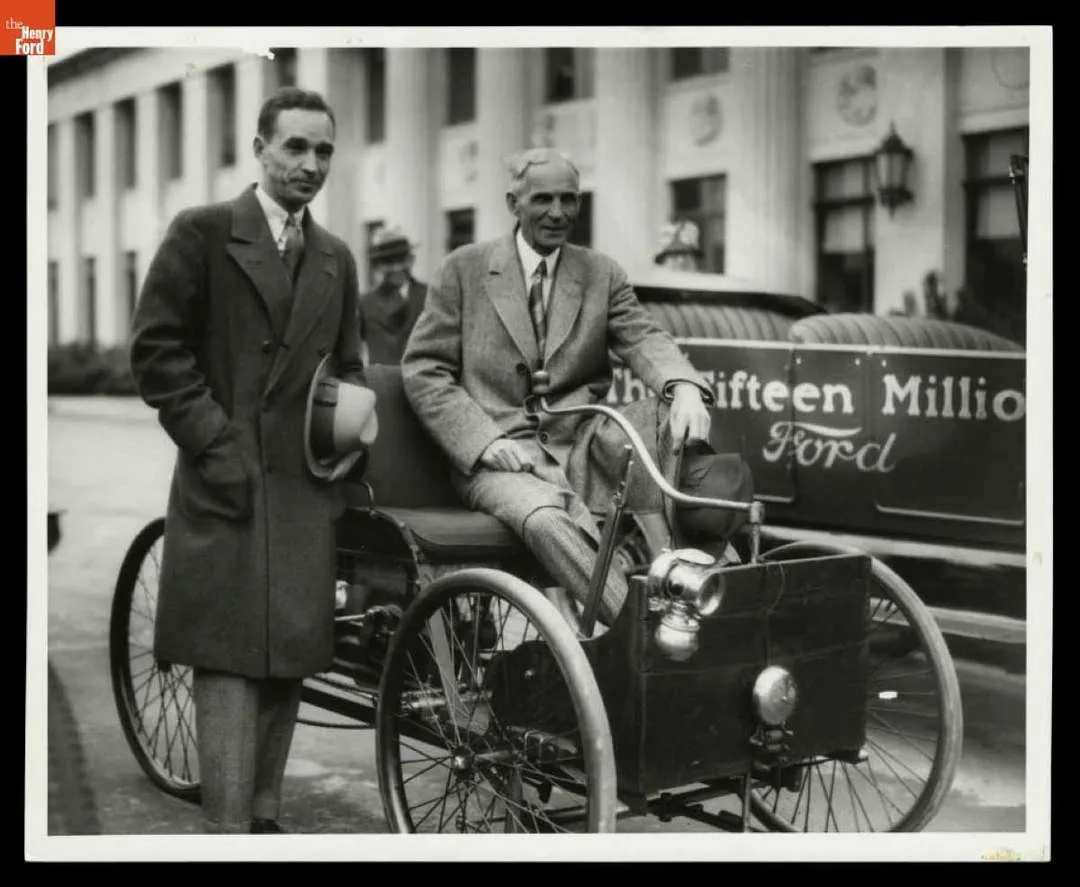 Photo: Henry Ford, via cdn.thecollector.com
Ford's real innovation wasn't giving workers Saturday off—it was recognizing that workers with weekend free time became weekend consumers. Ford employees with Saturday off could shop for cars, plan Sunday drives, and participate in the automobile culture that Ford was trying to create.
The Weekend as American Institution
By 1940, the five-day workweek had become standard across American industry, but Saturday's role had evolved far beyond anyone's original intentions. What began as religious accommodation for Jewish immigrants had become the foundation of American consumer culture.
Saturday shopping trips became family traditions. Saturday night entertainment became a multi-billion-dollar industry. Weekend travel created the tourism economy. The American weekend—that 48-hour period of freedom that millions of workers now consider their birthright—emerged not from grand design but from a series of practical accommodations that nobody planned as a package deal.
Today, as debates about four-day workweeks gain momentum, it's worth remembering how the five-day workweek actually developed. It wasn't the result of labor negotiations or management generosity. It was the accidental outcome of religious observance, funeral industry logistics, and commercial opportunism—proof that sometimes the biggest social changes happen not through revolution but through a series of small accommodations that add up to transformation nobody saw coming.