A Grieving Undertaker's Grudge Against His Phone Operator Changed How America Does Everything
A Grieving Undertaker's Grudge Against His Phone Operator Changed How America Does Everything
Every time you skip the checkout line by using a self-service kiosk, every time you pull cash from an ATM without speaking to a teller, every time you book a flight without calling an airline — you're participating in a logic that traces back to a furious undertaker in Kansas City, Missouri, and the telephone operator he was convinced was ruining his business.
 Photo: Kansas City, Missouri, via c8.alamy.com
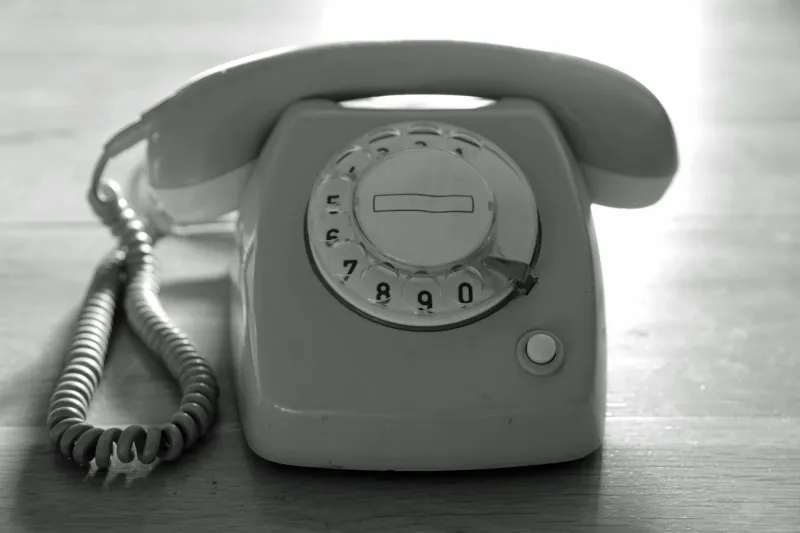
The rotary dial telephone is one of those objects that feels like it must have been designed for the user's convenience. It wasn't. It was designed to solve someone else's problem entirely, and the solution it introduced changed the structure of American commerce in ways that are still unfolding today.
The Operator Was the Internet
To understand what Almon Brown Strowger was so angry about, you have to understand what telephone calls looked like in 1889. There was no dialing. There were no numbers, really. When you picked up a telephone handset, a human operator — almost always a young woman, seated at a switchboard in a central exchange — answered immediately. You told her who you wanted to reach. She plugged a cable into the right socket and connected you.
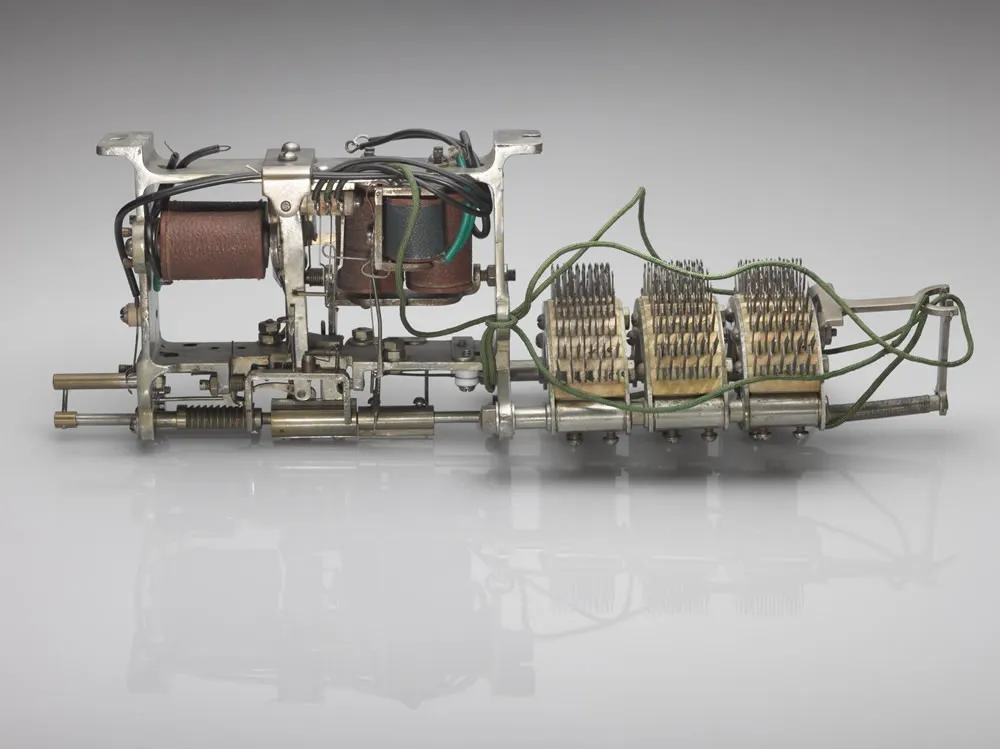 Photo: Almon Brown Strowger, via www.webstermuseum.org
The operator was the entire routing system. She knew every subscriber in town by name. She knew where the doctor lived, which store was open on Sundays, and who was feuding with whom. She was, in the most literal sense, the internet of her day — a human search engine and connection system rolled into one.
This arrangement had obvious advantages. It also had an obvious vulnerability: the operator knew everything, and she could do whatever she wanted with that knowledge.
The Undertaker's Theory
Almon Strowger ran a funeral parlor in Kansas City. He had competition — another undertaker across town. And Strowger became increasingly convinced that when grieving families called the operator and asked to be connected to an undertaker, they were being routed to his competitor instead of to him.
His suspicion had a specific shape: he believed the competing undertaker's wife was working as a telephone operator and steering business toward her husband's parlor. Whether this was actually happening is impossible to verify at this distance. But the grievance was real enough to Strowger that he decided to solve the problem the only way that would truly fix it: remove the operator from the equation entirely.
Strowger was not an engineer. He had no formal technical training. What he had was fury, determination, and apparently a great deal of time to think. Working in his basement with a collar box and some straight pins as a prototype, he developed the basic mechanical concept for an automatic telephone switching system — a device that could route calls without any human intervention.
The Machine That Replaced a Thousand Women
Strowger filed his patent in 1889 and received it in 1891. The system he described used electrical pulses — triggered by a caller pressing buttons or, in later refinements, turning a dial — to mechanically step through a series of switches and connect to the correct line. No operator required.
The first automatic exchange went live in La Porte, Indiana, in 1892. It served 75 subscribers. The local newspaper treated it as a curiosity. Telephone company executives treated it as a threat to a business model that depended on centralized human labor.
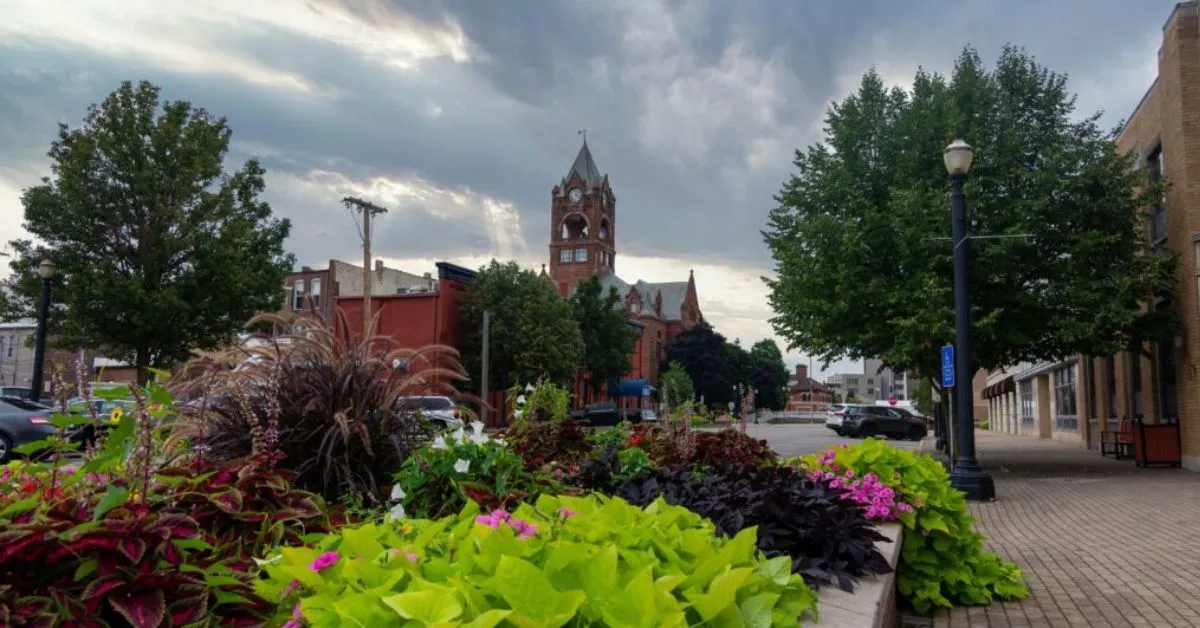 Photo: La Porte, Indiana, via cdn.greatnews.life
For decades, the major telephone companies resisted automatic switching. Operators were cheaper than the infrastructure required to automate exchanges at scale, and the companies had significant investments in their human workforce. But as telephone networks grew — and as the labor costs of employing thousands of operators in every city began to add up — the math eventually shifted.
By the 1920s, automatic exchanges were spreading across American cities. By the 1940s, operators were being phased out of routine local calls. The rotary dial telephone, which gave users direct control over routing their own calls, became standard equipment in American homes. Millions of operators lost their jobs over the following decades — one of the largest single workforce displacements in American labor history up to that point.
The Logic That Outlasted the Phone
What Strowger actually invented — beyond the mechanical switching system — was a philosophy. The idea that a transaction or a service could be redesigned to remove the human intermediary, giving the end user direct access to the outcome they wanted, was genuinely radical in 1889. It ran counter to how almost every service in American life was structured.
You didn't walk into a store and pull items off shelves yourself — a clerk retrieved them for you. You didn't pump your own gas. You didn't check yourself in at a hotel. You didn't look up your own medical records. Every transaction involved a human mediator who controlled your access to what you needed.
Strowger's switching system demonstrated that the mediator could be automated away — that a machine could route your request to the correct destination without a person making that judgment call. Once that idea existed, it was only a matter of time and technology before it spread.
The ATM arrived in 1969, removing the bank teller from cash withdrawals. Supermarket self-checkout appeared in the 1980s. Online shopping eliminated the sales floor in the 1990s. Airport self-check-in kiosks arrived in the 2000s. Mobile payment apps removed the cashier in the 2010s. Each of these innovations follows the same structural logic: identify the human in the middle of a transaction, build a system that bypasses them, and give the user direct access.
None of these inventors were thinking about Almon Strowger. But every one of them was solving his problem.
The Dial Tone as Cultural Signal
There's a small, overlooked detail in this story that's worth sitting with. The dial tone — that steady, reassuring hum you heard when you picked up a telephone handset — was itself a product of automation. It was the machine's way of saying: I'm ready. You're in control. Go ahead.
For most of American history, picking up a phone meant waiting for a human to acknowledge you. The dial tone replaced that human acknowledgment with a machine signal. It was the sound of the intermediary stepping out of the room.
We hear that same signal everywhere now, in a hundred different forms. The loading screen that resolves into a homepage. The ATM that asks you to enter your PIN. The kiosk that says touch here to begin. All of them are dial tones. All of them are telling you the same thing a Missouri undertaker's invention first told the residents of La Porte, Indiana, in 1892.
You don't need anyone's help. You can do this yourself.