The Engineering Gamble That Spun Into America's Greatest Symbol of Summer
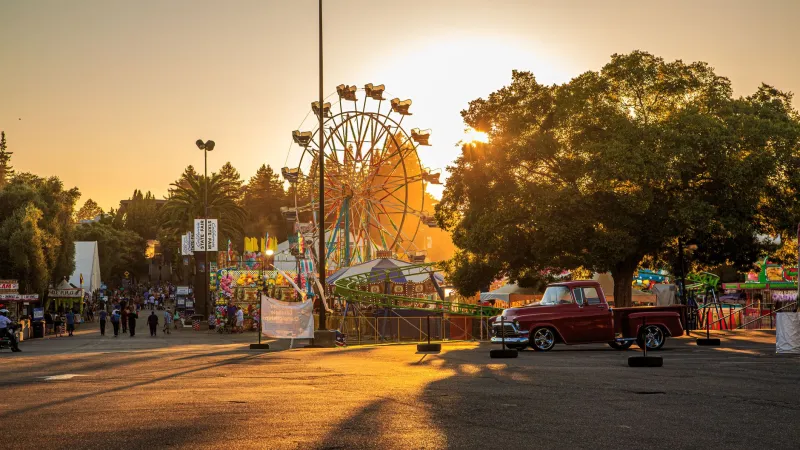
The Engineering Gamble That Spun Into America's Greatest Symbol of Summer
Think about the last time you saw a Ferris wheel. Maybe it was at a state fair, a boardwalk, or a downtown festival. You probably didn't stop to think about it — it was just there, the way it always is, turning slowly against the sky. That's exactly what makes its origin story so strange. The Ferris wheel almost didn't survive its own inventor.
America Needed to Win Something
In 1889, France unveiled the Eiffel Tower at the Paris Exposition Universelle, and the world lost its mind. It was 984 feet of iron audacity — the tallest man-made structure on earth — and France made sure everyone knew it. When Chicago won the bid to host the 1893 World's Columbian Exposition, American pride was immediately on the line. The fair's organizers were blunt about it: the United States needed something that would make Paris look ordinary.
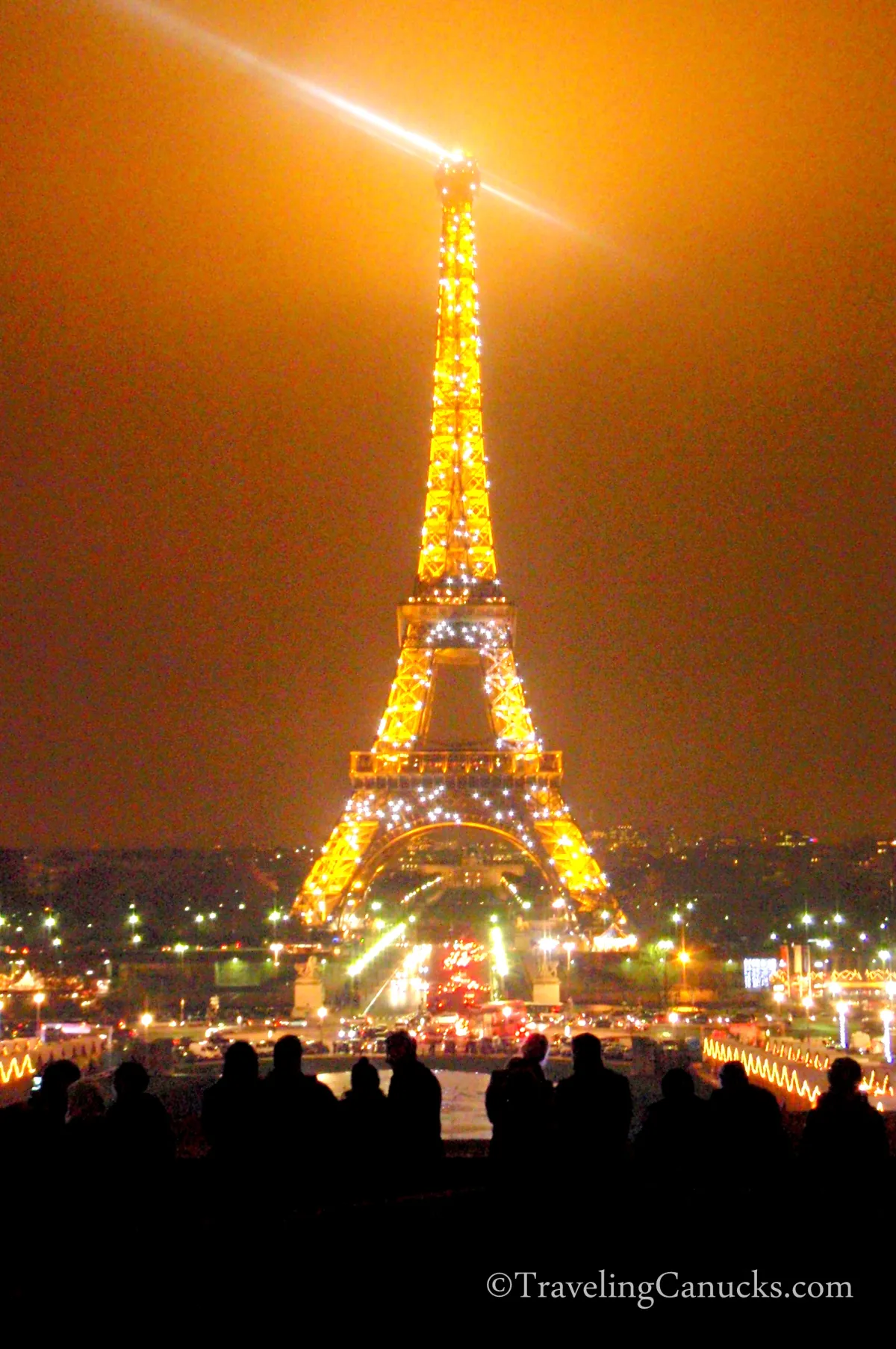 Photo: Eiffel Tower, via travelingcanucks.com
Daniel Burnham, the fair's director of works, put out an open call for ideas. Engineers and architects submitted proposals. Most were dismissed as unimaginative or physically impossible. Then a 33-year-old bridge engineer from Pittsburgh named George Washington Gale Ferris Jr. sketched something on a dinner napkin that no one could quite believe — a 264-foot rotating steel wheel carrying 36 wooden cars, each large enough to hold 60 passengers, spinning two full revolutions every nine minutes.
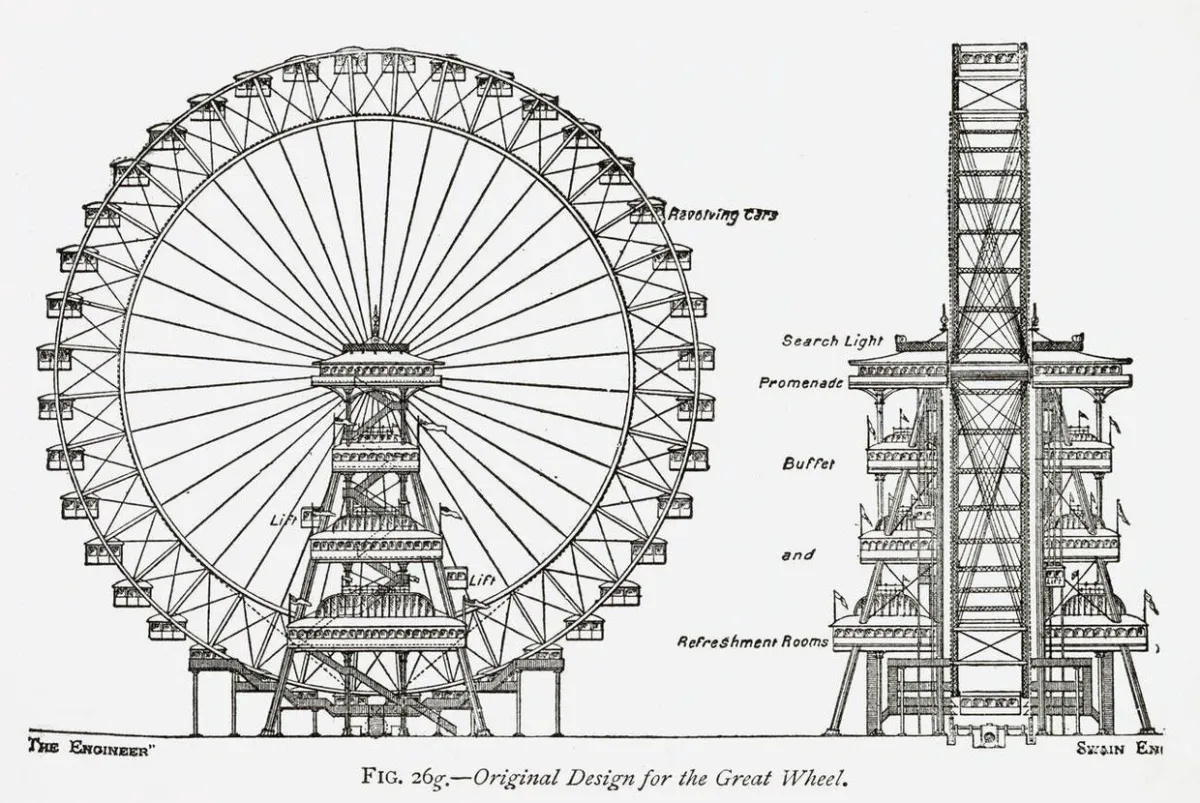 Photo: George Washington Gale Ferris Jr., via assets3.cbsnewsstatic.com
Burnham initially called it nonsense. The committee laughed. Ferris, undeterred, funded much of the engineering review himself and eventually wore them down. Construction was approved with less than a year until the fair's opening.
Building the Impossible on a Deadline
What followed was one of the most stressful construction projects in American history. The wheel's axle alone — a single hollow steel rod 45 feet long and weighing 46 tons — was, at the time, the largest single piece of steel ever forged. The two supporting towers had to be sunk deep into the soft Chicago soil. Workers built the structure in brutal Midwestern winter conditions, with the clock running and the entire country watching.
The wheel opened on June 21, 1893, about six weeks into the fair. On its first day, thousands of Chicagoans lined up to pay 50 cents a ride — roughly $17 today — just to be rotated into the sky above Lake Michigan. At its peak, the wheel carried 38,000 passengers a day. By the time the fair closed, more than 1.4 million people had ridden it. The New York Times called it "the most novel engineering achievement of the age."
Ferris had done it. He'd out-spectacled the Eiffel Tower.
Then Everything Fell Apart
Here's the part nobody tells you at the county fair.
Almost immediately after the exposition closed, Ferris's victory curdled into a prolonged nightmare. The fair's organizers disputed payment, and Ferris spent years in litigation trying to recover the money he was owed. He moved the wheel to a second Chicago location, but the city grew hostile to the structure and repeatedly threatened demolition. His marriage collapsed. His health deteriorated. In 1896, George Ferris died of typhoid fever at 37 years old, broke and still fighting lawsuits.
The wheel he'd built — the original, the one that changed everything — was eventually sold for scrap metal in 1906. It was demolished with 200 pounds of dynamite. The man who invented the Ferris wheel never lived to see it become a cultural institution, and his original creation was literally blown up.
How a Demolished Ride Became an Eternal Symbol
So how did the Ferris wheel survive its own destruction?
The answer is that other people built copies. Ferris had never successfully patented the design in a way that prevented imitation, and by the time his original wheel was gone, smaller versions had already begun appearing at carnivals, seaside resorts, and traveling fairs across the country. These weren't the grand engineering statements Ferris had imagined — they were compact, affordable, and easy to transport. They democratized the experience.
Throughout the early 20th century, the Ferris wheel became inseparable from the American carnival circuit. It required no particular skill, no athletic ability, no prior knowledge. You sat down, the world lifted away, and for two minutes you could see your town from above. For a nickel. That simplicity made it universal.
By the mid-20th century, the wheel had migrated into American visual shorthand. It appeared in paintings, photographs, and film as a reliable shortcut for nostalgia, childhood, and the particular sweetness of summer. When filmmakers wanted to signal "innocent joy," they pointed a camera at a spinning wheel against a twilight sky. The image did the work instantly.
Still Spinning, Still Surprising
Today, the Ferris wheel has come full circle — quite literally. Modern versions like the High Roller in Las Vegas (550 feet) and the Seattle Great Wheel have reclaimed the grand scale Ferris originally intended, while millions of smaller wheels continue turning at fairs and festivals every summer weekend across America.
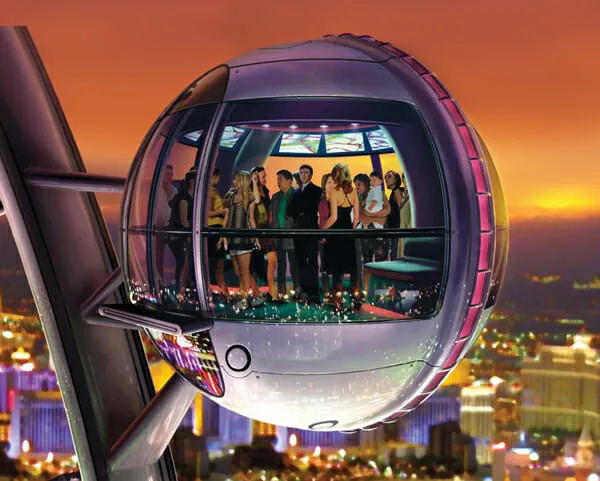 Photo: High Roller, via coaster-nation.com
George Ferris wanted to one-up the Eiffel Tower and prove American engineering could match European spectacle. He succeeded, then lost almost everything because of it. But the thing he built — or rather, the idea he proved was possible — turned out to be more durable than any single structure.
The Ferris wheel is now so embedded in American life that most people never wonder where it came from. Which, honestly, is probably the greatest tribute a forgotten inventor could receive.