How a Melting Candy Bar Inside a Military Lab Quietly Revolutionized the American Kitchen
Photo: Joe Haupt from USA, CC BY-SA 2.0, via Wikimedia Commons
Most kitchen appliances have a pretty straightforward origin story. Someone needed to solve a cooking problem, so they built a machine to solve it. The microwave oven doesn't follow that script at all. Nobody was trying to cook faster. Nobody was frustrated with their oven. The whole thing started because an engineer noticed his candy bar had turned into a puddle — and he was curious enough to ask why.
That engineer was Percy Spencer, and in 1945, he was working at Raytheon, one of America's most important military contractors. The war was nearly over, but the technology it had produced was very much alive — and very much classified.
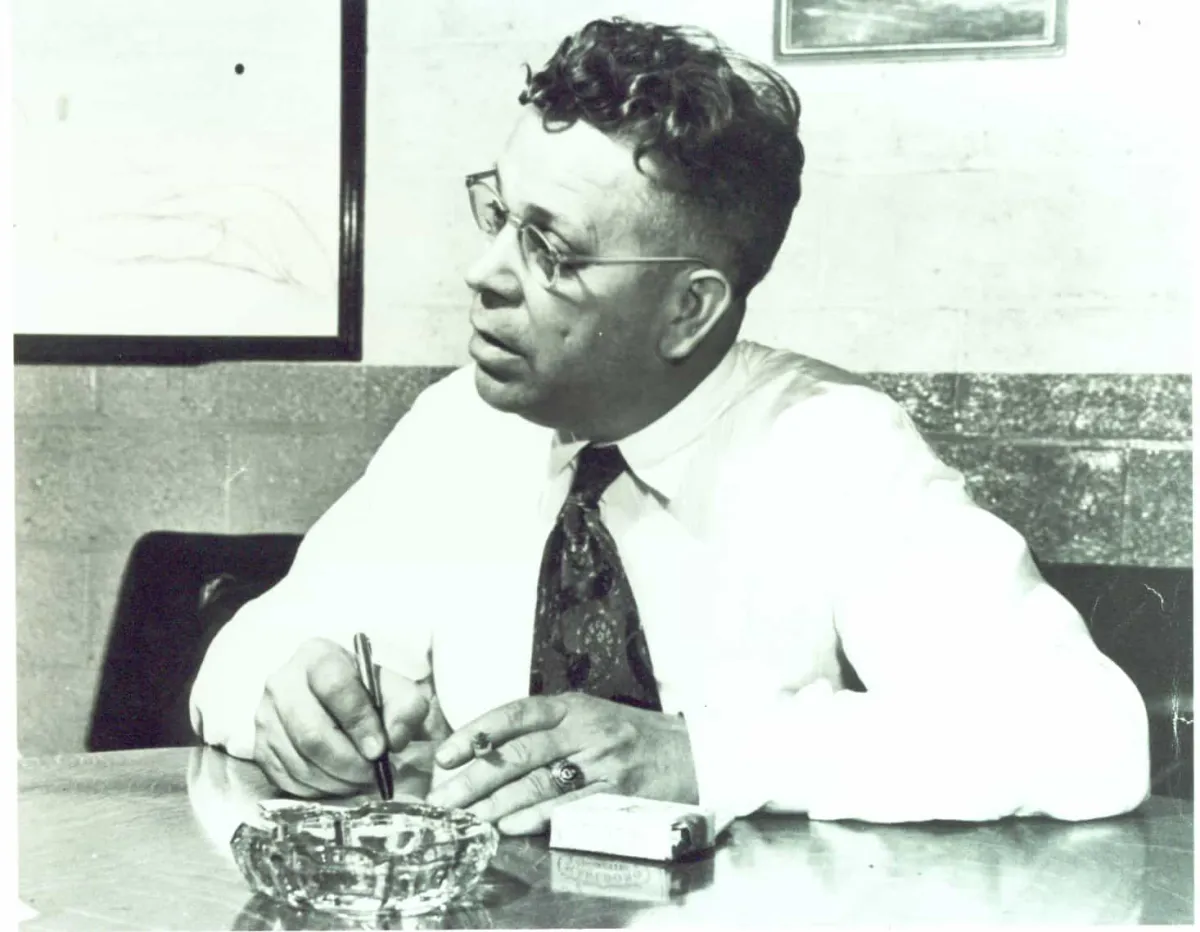 Photo: Percy Spencer, via blogger.googleusercontent.com
Radar Was Everywhere, and Nobody Fully Understood What It Was Doing
During World War II, radar became one of the most strategically important technologies on the planet. The ability to detect enemy aircraft and ships from miles away changed the course of the war in ways that are still being studied today. At the heart of radar systems was a component called the magnetron — a vacuum tube device that generates microwave radiation. Raytheon was one of the primary manufacturers of magnetrons for the Allied forces, and Spencer was one of their most skilled engineers.
He had no formal education beyond grammar school. He'd taught himself electrical engineering through sheer determination and had become one of the most respected technical minds at the company. In the postwar period, Raytheon was trying to figure out what to do with all this radar expertise now that the military contracts were winding down.
Spencer was walking past an active magnetron one afternoon in 1945 when he noticed the chocolate bar he'd tucked into his shirt pocket had gone completely soft. It wasn't a warm day. He hadn't been near a heat source. But the magnetron had been running nearby — and something had clearly happened.
He Could Have Ignored It. He Didn't.
A lot of people would have shrugged, eaten the melted chocolate anyway, and gone back to work. Spencer was not that kind of person. He immediately started experimenting. He held popcorn kernels near the magnetron and watched them pop. He tried an egg — which exploded and reportedly startled a colleague standing too close. Within days, he had confirmed what he suspected: microwave radiation could generate heat inside food, cooking it from the inside out rather than from an external flame or element.
Raytheon filed a patent for a microwave cooking device in 1945. The first commercial unit, called the Radarange, appeared in 1947. It stood nearly six feet tall, weighed around 750 pounds, and cost approximately $5,000 — which in today's money is somewhere north of $60,000. It was installed in restaurants and commercial kitchens, not homes. The idea of a family owning one was essentially science fiction.
From Military Surplus to Middle-Class Kitchen
What changed everything wasn't a single breakthrough — it was the slow, grinding process of miniaturization and cost reduction that defined American manufacturing in the postwar decades. As radar technology became less classified and more commercially available, the components inside microwave ovens got smaller and cheaper. By the late 1950s, countertop versions were beginning to appear. By the mid-1960s, they were being marketed directly to American households.
Raytheon acquired the Amana Corporation in 1965, and Amana released the first genuinely affordable countertop microwave in 1967 — the Radarange, now redesigned for home use and priced at around $495. Still expensive, but within reach for a growing middle class that was increasingly fascinated with anything that felt modern, efficient, and scientific.
The timing was perfect. American domestic life was shifting rapidly. More women were entering the workforce. Families were busier. The idea of spending an hour cooking dinner every night was becoming less appealing, and the microwave promised something genuinely new: speed without sacrifice.
The Appliance That Rewrote the American Dinner
By the 1970s, microwave ovens were appearing in showrooms alongside refrigerators and dishwashers. By 1975, annual microwave sales in the United States had overtaken gas ranges. By the early 1980s, they were in roughly half of American homes. Today, that number sits at around 90 percent — making the microwave one of the most rapidly adopted kitchen appliances in American history.
The food industry reorganized itself around the technology. Frozen meals, which had existed since the 1950s as TV dinners designed for conventional ovens, were reformulated and repackaged specifically for microwave cooking. Popcorn — one of Spencer's very first experiments — became a billion-dollar microwave product category on its own. Entire grocery store aisles exist today because Percy Spencer's candy bar melted.
What's remarkable is how little any of this was planned. Raytheon wasn't looking for a cooking application. Spencer wasn't trying to disrupt the kitchen appliance market. The magnetron wasn't designed with food in mind at all. It was a weapon of war, repurposed by curiosity.
Why It Still Matters
The microwave oven is one of the clearest examples of what historians sometimes call "postwar technological bleed" — the way military research funded by taxpayers during World War II quietly flowed into American domestic life in the decades that followed. The internet has a similar origin story. So does GPS. So does duct tape.
But the microwave is perhaps the most intimate of these inheritances, because it sits on your counter and reheats your leftovers at 11 p.m. and never once announces what it used to be. It was born inside a classified military laboratory, designed to detect enemy aircraft, and somewhere along the way it became the thing you use to make popcorn on a Tuesday night.
Spencer reportedly received a bonus of two dollars from Raytheon for his discovery. The company, on the other hand, built an entirely new industry from it.
Some candy bars are worth more than others.