The Street Snack That Broke Into the Movies and Never Left
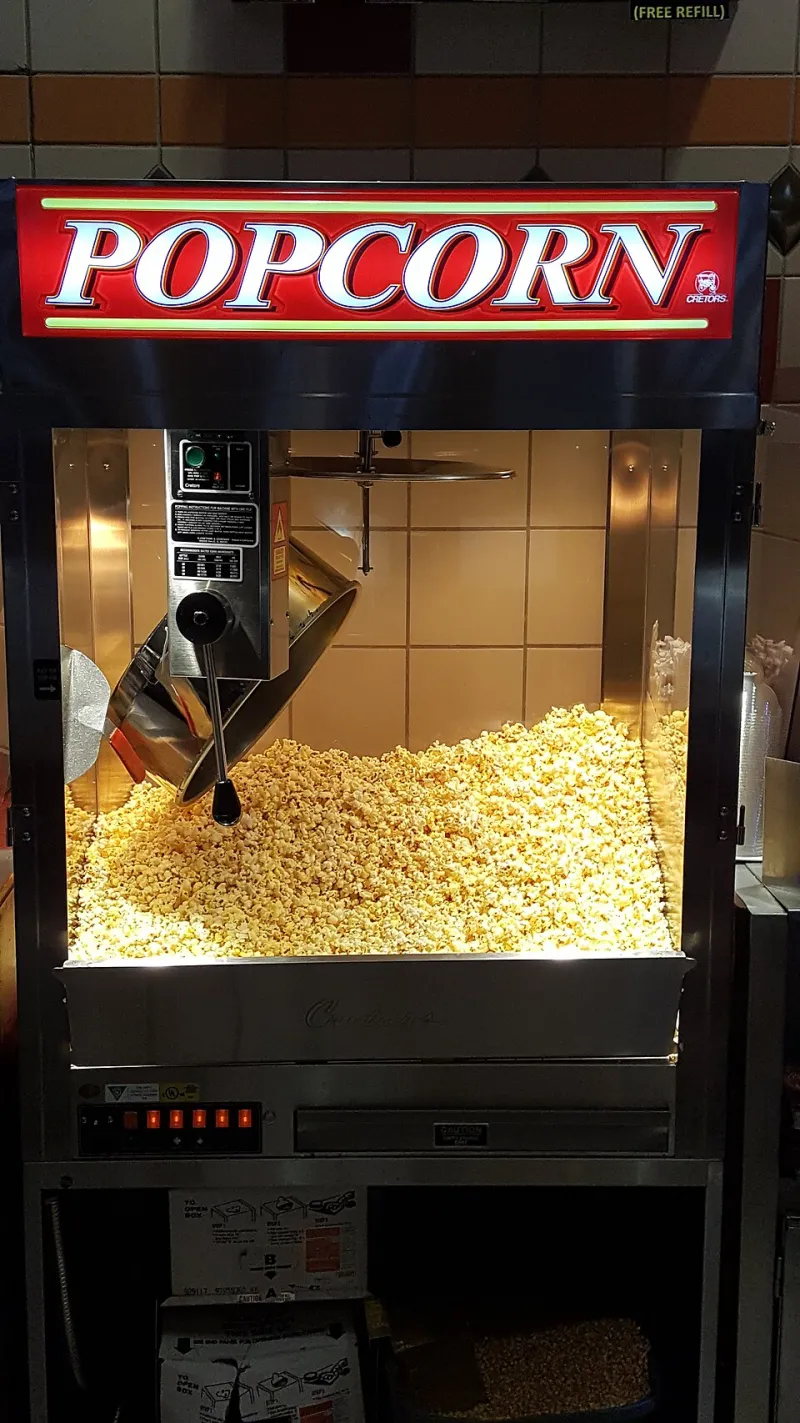
Photo: Tim Evanson, CC BY-SA 2.0, via Wikimedia Commons
There's a moment that happens in every American movie theater, usually around the time the trailers start: the rustle of a popcorn bag, the smell of fake butter, the crunch of the person three seats down. It's so universal that for many of us, the snack is the movie. A film without popcorn feels broken.
It almost didn't happen. In fact, for the first decades of American cinema, the most powerful people in the industry did everything they could to stop it.
A Snack With a Reputation Problem
In the 1910s and '20s, going to the movies was aspirational. Theater owners were building grand movie palaces — chandeliers, velvet ropes, oriental carpets, ushers in uniform. These men saw themselves as heirs to legitimate theater, and they had a very specific idea about what their audience should consume: fine confections, perhaps. Nothing that crunched.
Popcorn failed that test on every count. It was sold by street vendors from pushcarts. It was associated with circuses, ballparks, and county fairs. It smelled. It got into the carpet. Its hulls were forever embedded in expensive upholstery. Theater owners posted signs banning it outright, and vendors were regularly shooed off their steps.
The snack was, quite literally, kept outside the velvet rope.
The Vendor Who Wouldn't Take No
Denied the lobby, popcorn sellers got creative. Some set up shop directly across the street from the big palaces, catching moviegoers before they went in. Others worked out informal arrangements with theater staff — a little money under the table to look the other way.
Then came 1929.
The Depression Did What Snootiness Couldn't
The Great Depression gutted the movie business. Ticket sales collapsed. The ornate palaces, with their enormous overhead costs, started bleeding money. Owners who had once sneered at popcorn found themselves facing a choice between their dignity and their doors.
The math was brutal and beautiful. Corn was cheap. A kettle and a machine cost almost nothing. Popcorn sold for a nickel a bag and cost pennies to make — markups north of 700%. No other product in the theater came close. Candy had suppliers, contracts, and margins. Popcorn had a farmer, a kernel, and heat.
One by one, the palaces surrendered. Some owners installed machines in their lobbies; a famous account tells of a chain owner who bought struggling theaters, installed popcorn equipment, and watched the locations turn profitable within months. Concession stands — previously an afterthought — became profit centers. Within a few years, the snack that had been banned from the lobby was funding the building.
Moviegoing survived the Depression in no small part because of a street snack the industry had spent twenty years rejecting.
The Snack That Owns the Theater
The relationship stuck, and it reshaped the economics of American cinema permanently. Today, concession sales account for the majority of many theaters' profits — the ticket price mostly passes through to the studios. That $8 bucket of popcorn isn't a markup on a movie. It's the movie's landlord.
There's a certain irony in how it all shook out. The moguls who banned popcorn wanted an audience that behaved like theatergoers at a symphony. What they got, once the Depression forced their hand, was something better: an audience that associates a specific smell and sound with the joy of watching a story on a big screen in the dark.
The velvet rope came down. The snack came in. And eighty years later, the movies still sound better with popcorn.